These are birds that glow softly in the understorey — subtle, intimate, and deeply grounding. One would probably see it before they hear it as a movement near eye level – A gentle shift of blue against the green and then it settles.
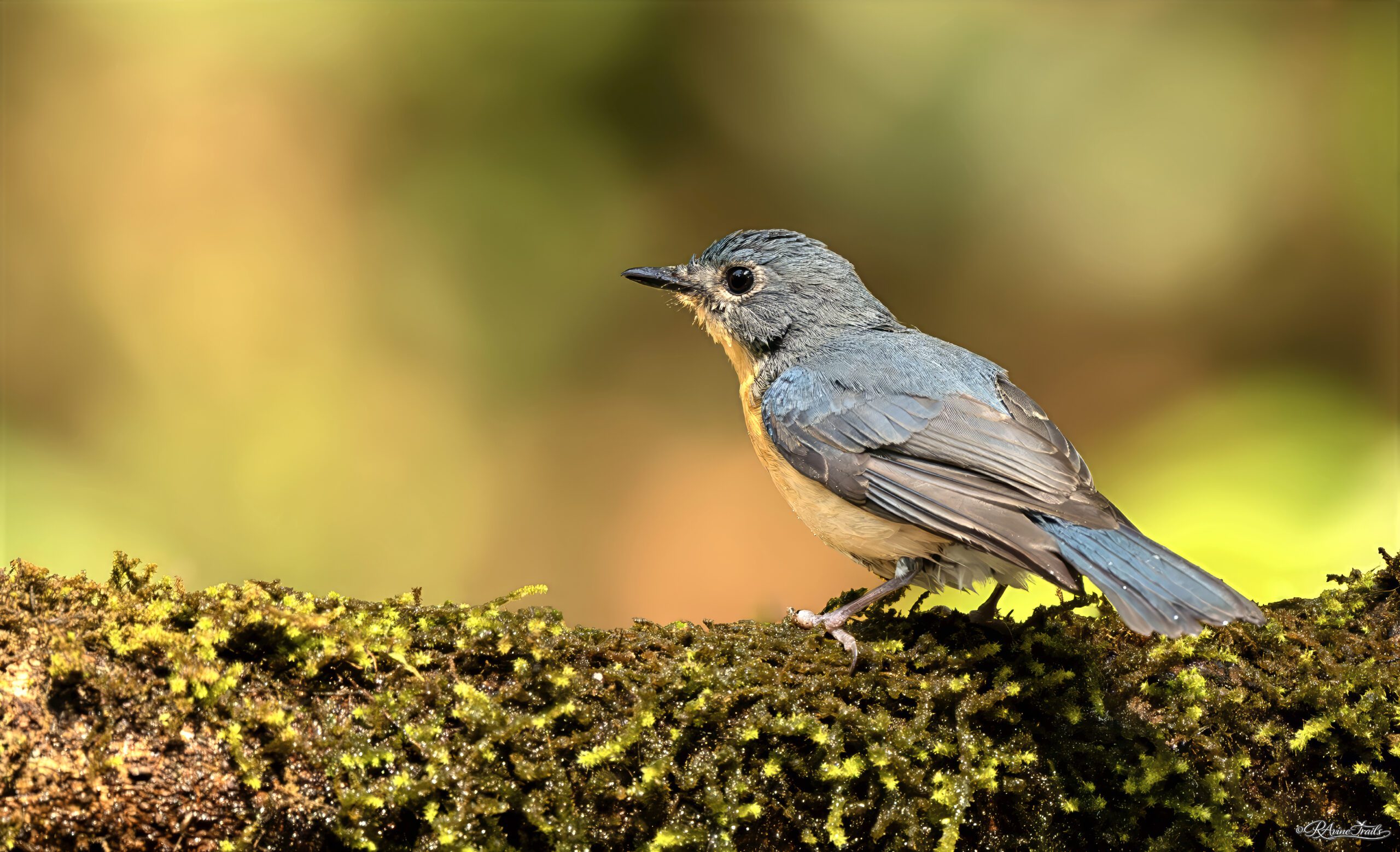
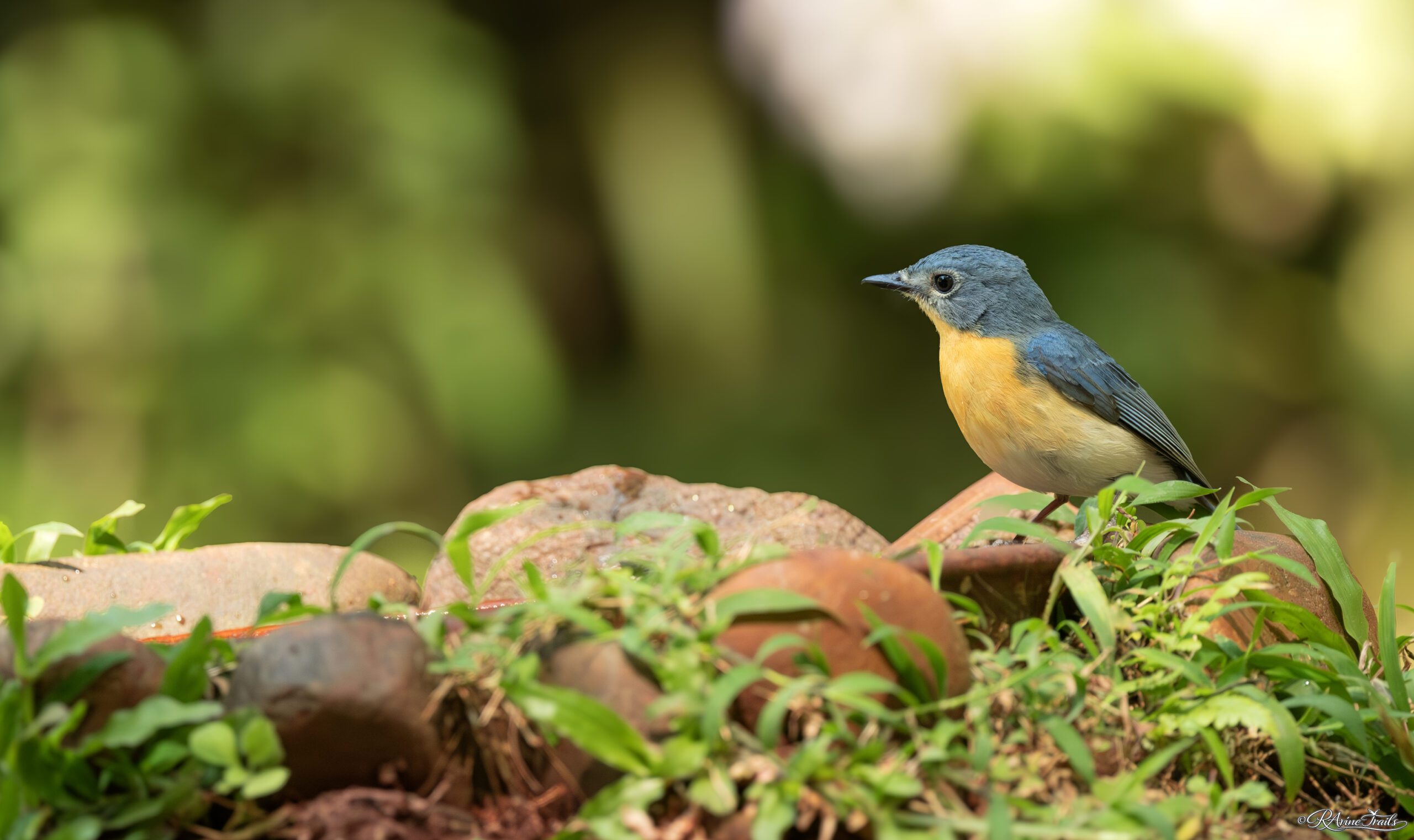
The male carries a certain elegance: a muted blue crown and mantle, warm orange throat and breast, and a pale underbelly that catches morning light like soft parchment. There is no extravagance in its coloration. Instead, there is balance — cool and warm tones meeting in quiet harmony.
Reflections
Watching a Tickell’s Blue Flycatcher go about its job feels personal.
It does not perform for crowds. It does not command the skyline. It chooses low perches — moss-covered logs, quiet stones, fallen branches — as if inviting you into its space rather than asserting its own.
It prefers shaded woodland, forest edges, groves, and even well-vegetated gardens. It is a classic sit-and-wait hunter. Perched low to mid-level, it scans patiently for insects before making short, precise flights into the air.
The return to the same perch is almost ritualistic. Unlike restless flocking species, it is often solitary. Calm. Self-contained. Its movements are efficient, economical — never hurried without reason. The soft whistling notes it produces blend gently into the ambient soundscape, rarely dominating it.
There is composure in its rhythm.
Conservation Significance
Like many insectivores, its survival depends on the quiet abundance of undergrowth life. Declining insect populations, excessive pesticide use, and the clearing of leaf litter subtly reduce its hunting grounds. Where shrubs thin and understory vanishes, so too does the stability of species like this.
It does not demand wilderness.
But it does require living habitat
Fieldcraft
Photographing this species is easy because of the time and opportunity that it gives but is no doubt an exercise in tonal control.The interplay between the cool blue upper parts and warm orange underparts requires careful white balance and exposure. Early morning or late afternoon light enhances this natural contrast beautifully. Too harsh a light, and the delicate blue flattens; too little, and the warmth of the breast loses vibrancy.
Sharp focus on the eye is non-negotiable. When the eye holds detail, the entire frame breathes. Pre-focus on a likely perch. Watch for the subtle forward lean before a flight. Anticipation matters more than reflex.
The Tickell’s Blue Flycatcher will never overwhelm you with spectacle. Instead, it lingers quietly in memory Like a small ember glowing at the edge of a forest path. As long as insects hum beneath leaf litter and shrubs hold their quiet complexity, this gentle hunter will continue its watch.
Soft. Steady. Present.