There are birds that command silence when they arrive. And then there are birds like the Indian White-eye — small, restless, almost weightless — arriving not with drama, but with movement.
The Indian White-eye is not a solitary forest sentinel. It belongs to motion. To chatter. To community. It travels in small, energetic flocks, weaving through shrubs and canopy edges with remarkable agility. Rarely still for more than a few seconds, it hops and hangs acrobatically from fine twigs in search of insects, nectar, and soft fruits.
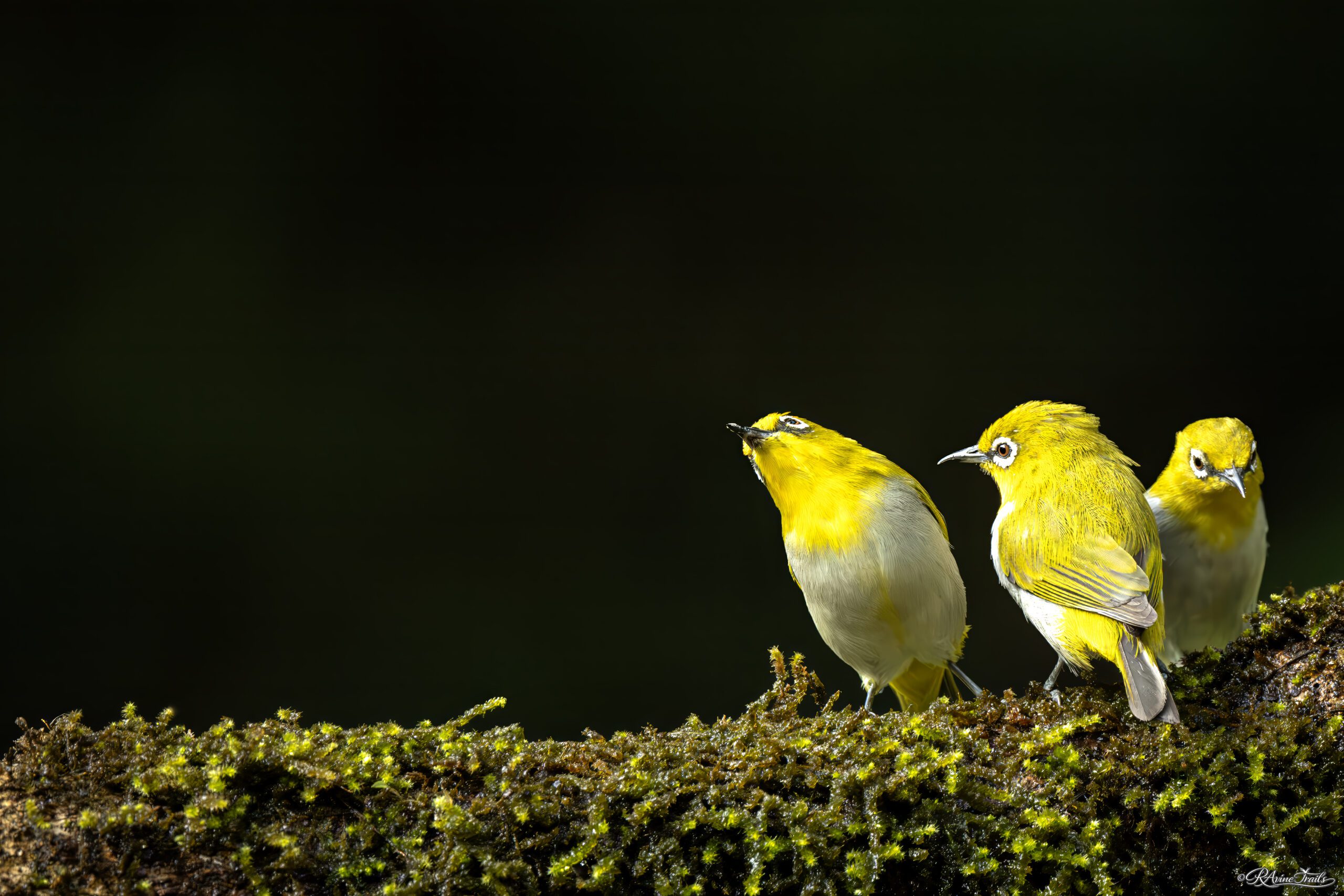
Its most distinctive feature — the neat white ring encircling its eye — gives it an expression of permanent alertness, as though it is always mildly surprised by the world. Olive above and white below, it blends seamlessly into foliage, becoming visible only when light catches that white halo.
Reflections
Watching an Indian White-eye is like trying to follow a thought mid-flight. It rarely grants you the composed stillness of a trogon or the stately pause of a hornbill. Instead, it offers fragments — a quick perch, a sideways glance, a flash of Yellow against sunlight.
And yet, in those fragments, there is joy.
There is something uplifting about their presence. Their energy feels light-hearted, almost playful. A flock moving through flowering trees carries the atmosphere of quiet celebration. The forest feels animated, alive, conversational.
Standing beneath them, one feels a subtle reminder: life is not always grand or dramatic. Sometimes it is quick, collaborative, and wonderfully ordinary.
White-eyes are social foragers. Their calls — high-pitched, rapid “tsee-tsee” notes — maintain constant communication within the flock. They move like a coordinated wave through vegetation, often mixed with other small passerines.
Conservation Significance
Unlike larger forest birds that declare territories boldly, the Indian White-eye negotiates space gently. It moves through flowering trees as both insect controller and pollinator, thriving where layered vegetation and seasonal bloom still exist — in gardens, orchards, and forest edges.
But familiarity with human spaces is not invulnerability.
White-eyes depend on continuity — hedgerows, native shrubs, fruiting trees, and living green corridors. When these give way to uniform landscaping, concrete spread, and pesticide-heavy cultivation, the delicate web that sustains them begins to thin. They do not vanish dramatically. They simply move on.
Adaptable, yes — but not limitless. The real threat is not only deforestation, but the gradual simplification of landscapes. When green spaces fragment into isolated islands, movement falters, feeding declines, and quiet absences begin to grow
A world with fewer native shrubs & flowers holds fewer insects.
A world with fewer insects holds fewer white-eyes.
Fieldcraft
Photographing the Indian White-eye demands anticipation and speed. The bird’s constant motion tests both autofocus systems and human patience. The window for a clean frame is often no more than a second — when it pauses briefly before the next hop.
Soft morning light becomes essential, especially to retain feather detail in the olive plumage while preserving the brightness of the white eye-ring. Overexposure can easily wash out this defining feature, so exposure compensation must be handled carefully.
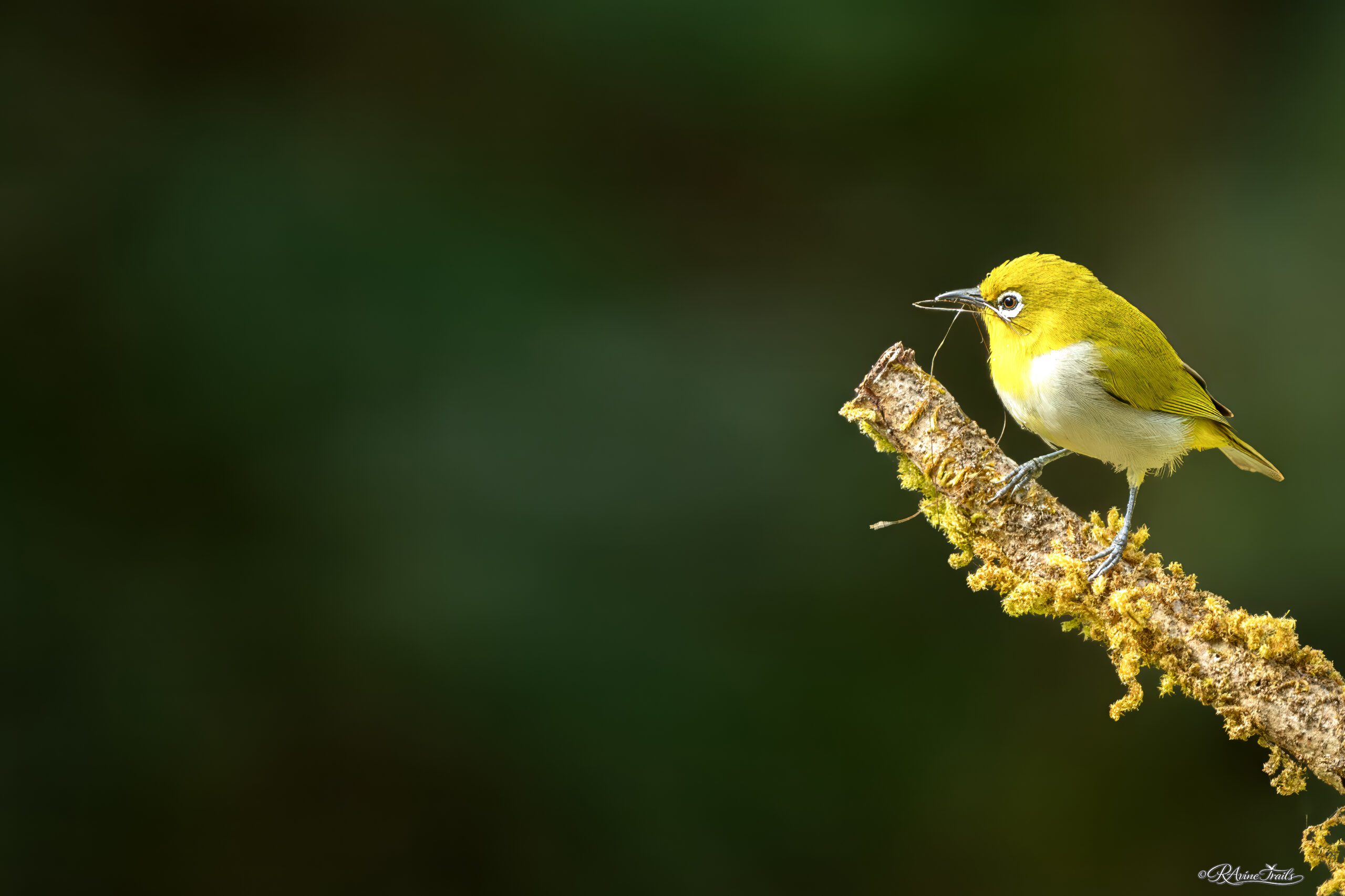
Compositionally, negative space works beautifully with this species. Because of its small size, placing it against smooth green bokeh emphasizes scale and delicacy. The moss-covered perch in this frame adds texture and context, grounding the subject while allowing the bird to remain the focal point.
Sharpness around the eye is critical. When the white ring is crisp and luminous, the image comes alive. Without it, the magic fades.But beyond the technical pursuit lies emotion. When you finally capture that fleeting pause — the bird balanced lightly, thread of nesting material in its beak or insect poised delicately — it feels earned. Not staged. Not forced. Earned.
In many ways, the Indian White-eye represents the everyday miracle of our ecosystems — small, energetic, essential. It does not demand attention with flamboyant colour or rare status. It simply goes about its life, stitching together the fabric of the landscape. To watch it is to witness motion made meaningful. And perhaps that is its quiet lesson: Even the smallest life, flitting through leaves, holds a role in keeping the forest whole. Because somewhere within them, a tiny white circle is watching.