Forests are often read from above — canopies, calls, flashes of movement in filtered light. But some of its most intimate stories unfold below, where the leaf litter shifts ever so slightly and pauses, and life moves with intent.
The fowls of the forest — the Red Junglefowl and Red Spurfowl — are not just inhabitants of the floor. They are part of the machinery that keeps it alive.
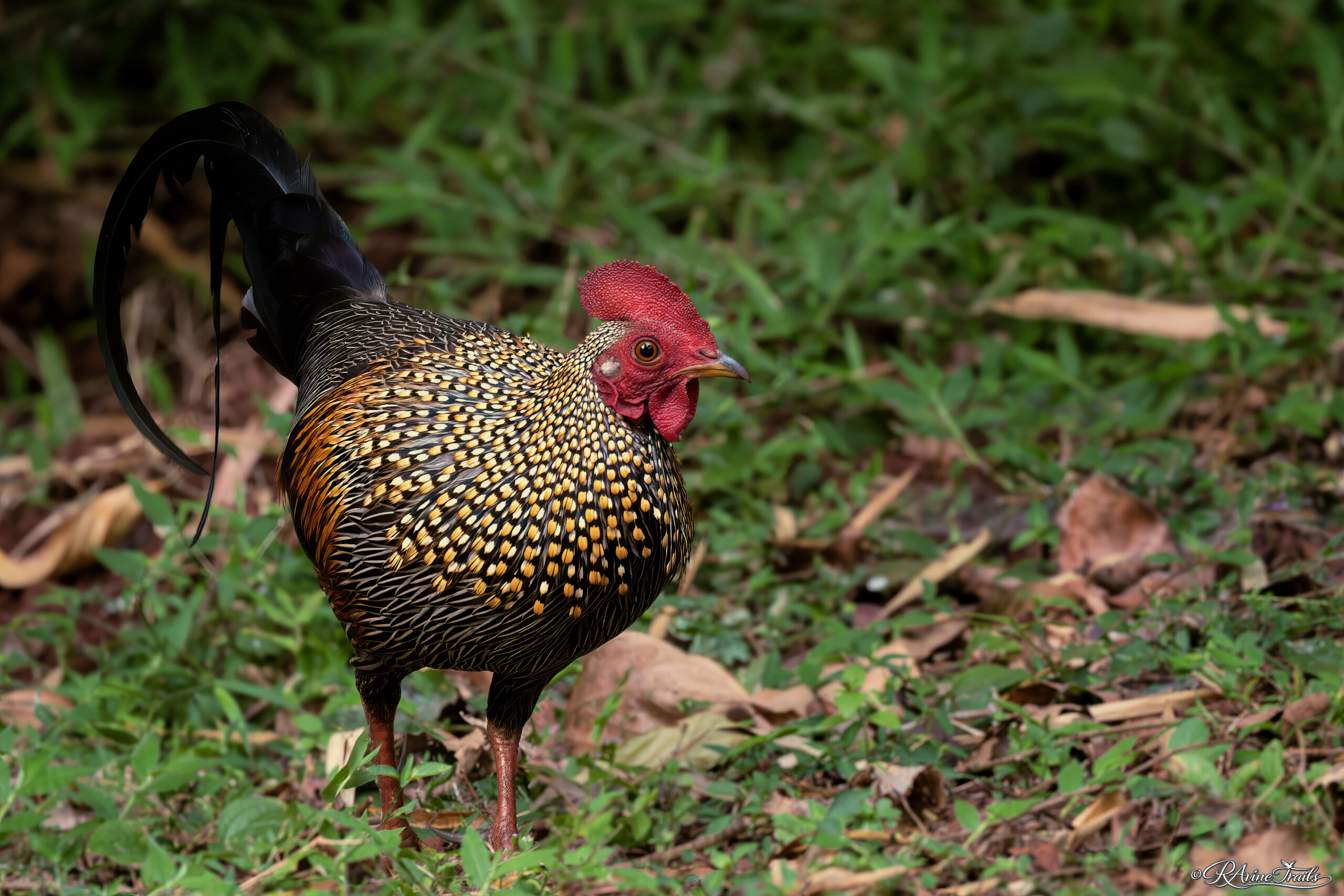
The Red Junglefowl, with its striking presence, carries an air of alert authority. Every step is deliberate, every pause filled with listening. It does not wander; it surveys. Even in stillness, there is a readiness — a constant negotiation with the unseen. The forest floor is not quiet for it; it is full of signals.
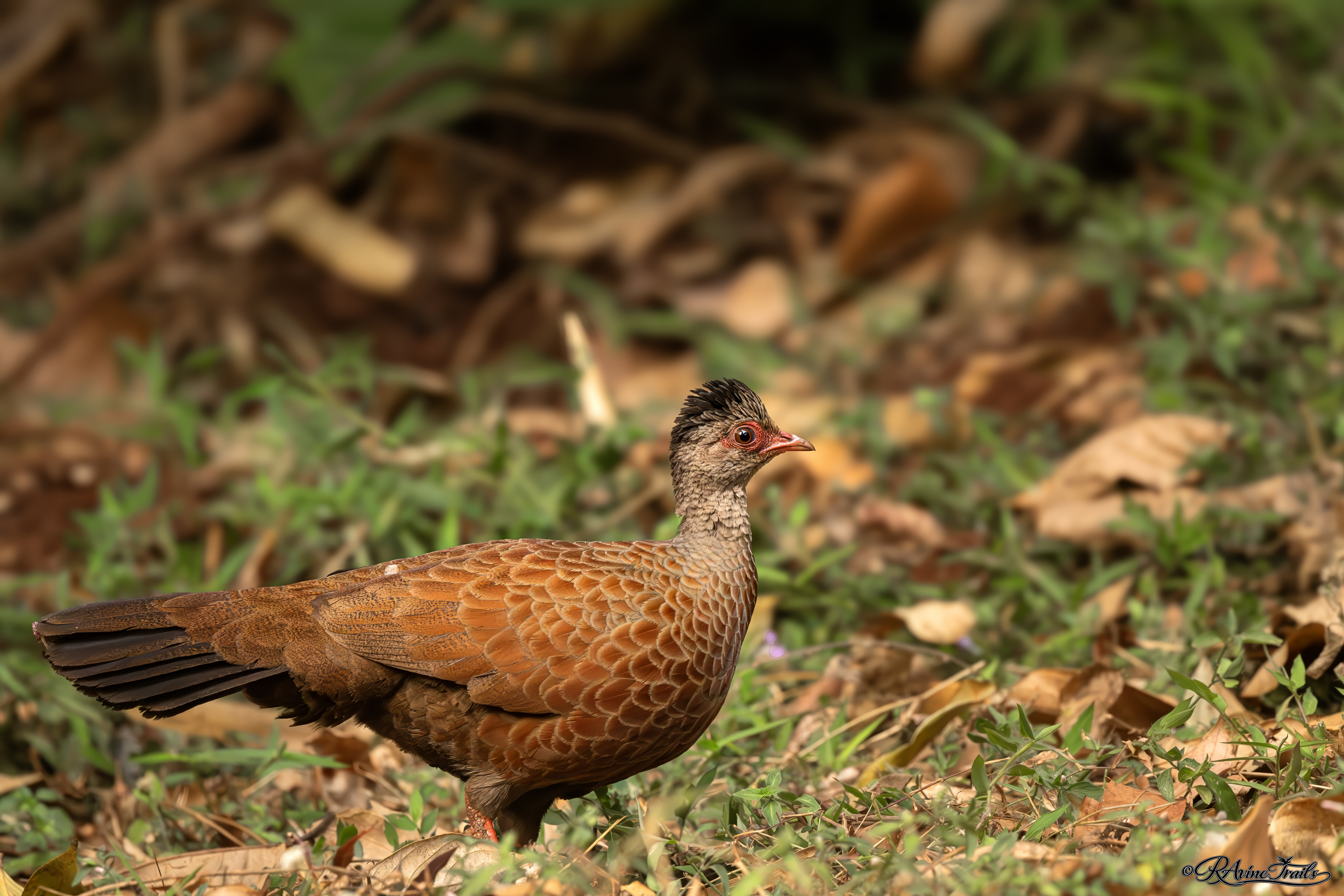
In contrast, the Red Spurfowl feels more woven into the earth. Warmer in tone, softer in movement, it slips through undergrowth with a kind of quiet familiarity. Where the junglefowl stands out, the spurfowl blends in — not by hiding, but by belonging.
Reflections
Both share the same world, yet move through it differently.
Their lives revolve around the ground — scratching through leaf litter, turning over decay, uncovering insects, seeds, fragments of a living system in constant renewal. In doing so, they become quiet custodians of the forest floor. What they disturb, they also sustain.
There is no spectacle here. No dramatic flight, no vivid song that carries far. Instead, there is rhythm.
A careful step.
A sudden freeze.
A soft rustle that disappears as quickly as it begins.
Fieldcraft
To photograph them is to lower your gaze — and your pace. It asks for patience, for stillness, for an understanding that these are birds of proximity, not pursuit. The frame is built not by chasing, but by waiting for the forest to accept your presence.
And when it does, the reward is subtle.
A glance.
A posture.
A moment where the bird and the ground seem indistinguishable.
Conservation Significance
The Ground dwellers are
1. Engineers of the Leaf Litter
Every scratch, every kick through dry leaves is ecological work.
They turn over decomposing matter, expose hidden insects, and accelerate nutrient cycling. What looks like casual foraging is, in reality, soil renewal in motion.
2. Regulators of Insect Life
Their diet keeps insect populations in check — especially those that would otherwise multiply unchecked in moist forest floors.
A decline in these birds often signals an imbalance below the canopy.
3. Seed Dispersal, Quietly Done
While not as celebrated as frugivores, they still move seeds across short distances.
Small, consistent dispersal helps maintain plant diversity at the ground level, especially shrubs and undergrowth.
4. Prey Base for Higher Predators
They form a crucial link in the food web — supporting raptors, small carnivores, and reptiles.
Remove them, and the ripple travels upward.
5. Indicators of Forest Health
These birds are sensitive to disturbance, hunting pressure, and habitat degradation.
A forest that still holds its fowls is often a forest that retains:
- Intact undergrowth
- Healthy insect populations
- Minimal chemical intrusion
- Functional ground ecology
What Threatens Them
The danger is rarely loud or immediate.
Hunting and disturbance push them deeper, making survival harder
Clearing of leaf litter (for aesthetics or fire prevention) strips away their feeding ground
Pesticide drift reduces insect availability
Fragmentation breaks continuous forest into isolated patches
Life in any form teaches you that nature is not only what rises above you. It is also what moves quietly at your feet — shaping, sustaining, and surviving without announcement.