In the evergreen hush, where sunlight filters through layers of ancient canopy and settles softly on moss-lined branches, a flash of blue catches the eye. The white bellied fly catcher sits quietly, small, poised, and impossibly delicate, as though painted into the forest itself.
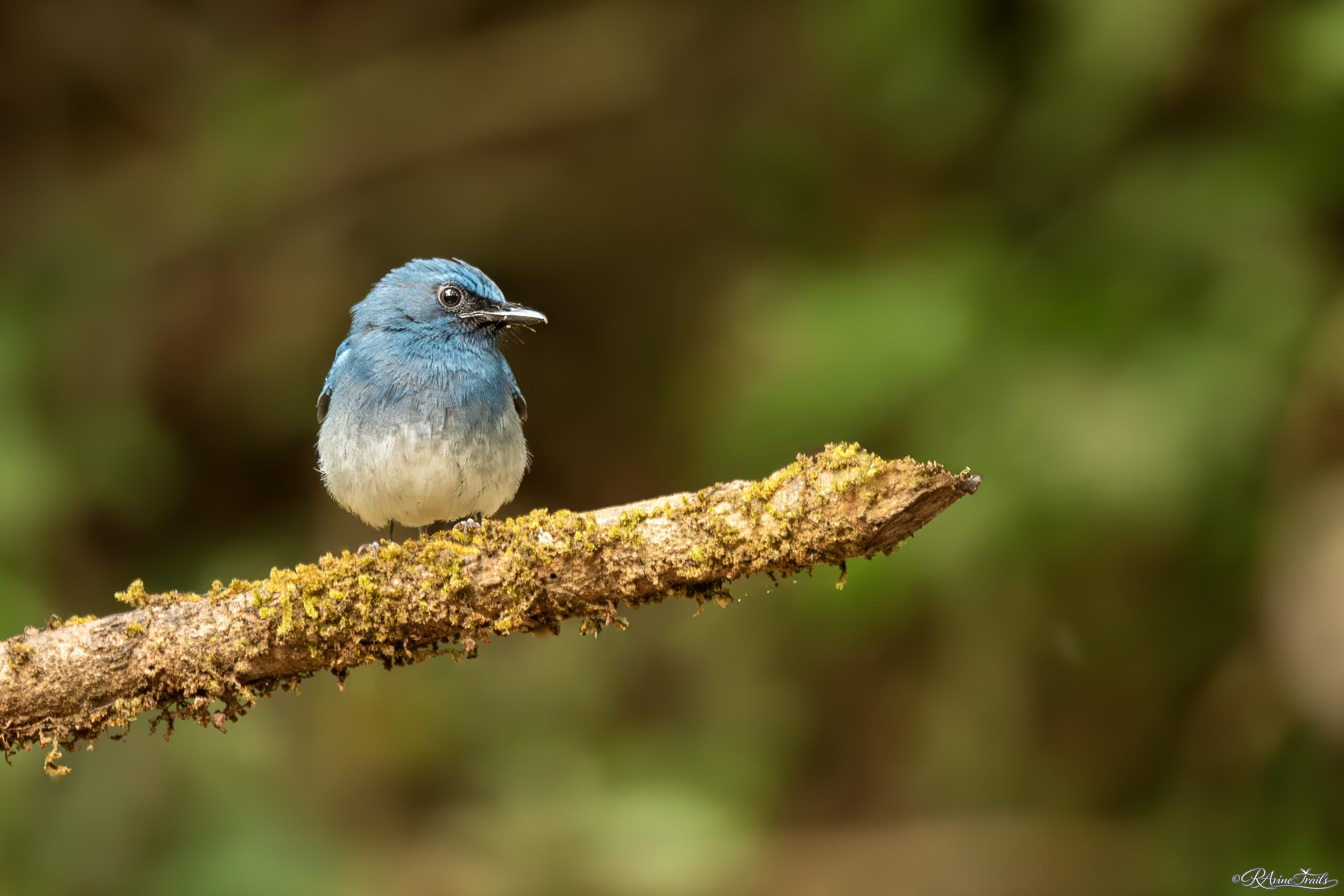
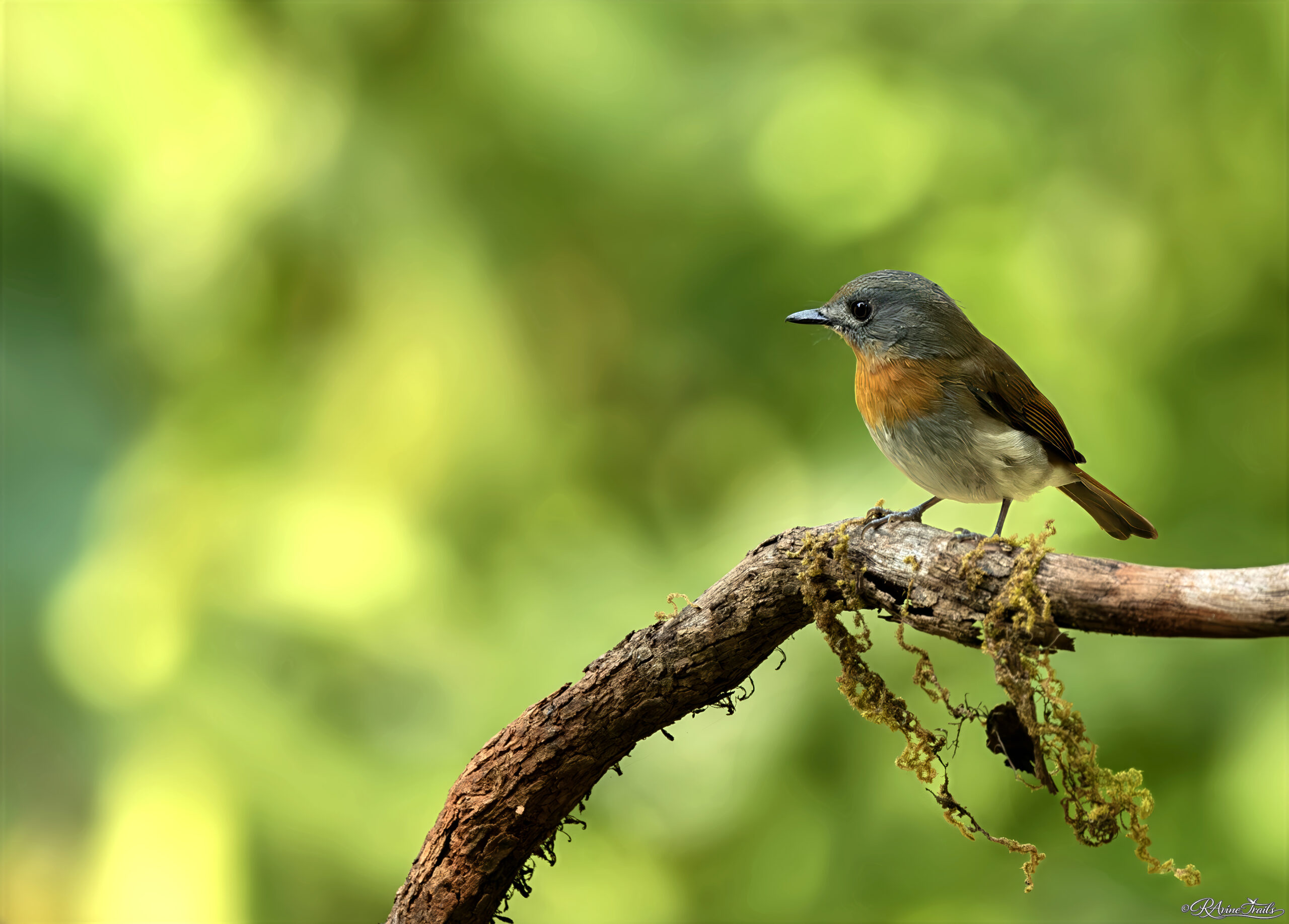
Endemic to the Western Ghats of India, this shy specialist is a true rainforest jewel. The male flycatcher wears a luminous blue crown and mantle that fades into a clean white belly especially during the breeding season — a striking yet elegant contrast that glows against the deep greens of its habitat. The female, subtler in tone, carries warm rufous-brown hues with a pale underbelly, blending seamlessly into the forest’s textures.
REFLECTIONS
Unlike the Trogon and the other birds that dominate the upper arching branches of the canopy, the White-bellied Blue Flycatcher prefers the lower levels of evergreen and moist deciduous forests. It is often found along shaded forest trails, near streams, or perched on low branches covered in moss.
The behaviour is that of a typical flycatcher: short, darting flights from a perch to snatch insects mid-air before returning to the same spot. This repetitive pattern makes patience your greatest friend as an observer. The bird may sit still for minutes — alert, head slightly tilted — before making a swift, precise flight to capture its prey.
Its call, a soft, melodious whistle, blends into the forest symphony. Often, you hear it before you see it.
Conservation Significance
Being endemic means its global survival is tied entirely to the health of the Western Ghats. Habitat fragmentation, deforestation, and increasing tourism pressure in sensitive forest areas pose a quiet but a growing challenge. While currently listed as “Least Concern,” the species depends heavily on intact understorey habitat. The thinning of forests does not just remove trees — it removes the subtle layers of life that birds like this depend on.
In many ways, the White-bellied Blue Flycatcher becomes a gentle indicator of forest health. Where it thrives, the forest still breathes well.
Fieldcraft
From a Photographer’s Lens, this species is both rewarding and technically demanding. The bird often chooses shaded perches, requiring careful exposure management to preserve detail in the blue plumage without losing texture in the white belly. Soft morning light works best, allowing natural colours to shine without harsh contrast.
Compositionally, simplicity elevates the frame. A moss-covered branch adds narrative texture, while a smooth green bokeh background allows the subject to stand apart. Eye-level perspective enhances intimacy — the moment feels less like documentation and more like connection.
Because the bird frequently returns to the same perch after feeding, anticipation becomes part of the craft. It is less about chasing and more about waiting — letting the scene unfold naturally. In that waiting, the forest teaches you stillness.
A Quiet Encounter
There is something profoundly calming about watching this tiny blue Jewel pause between flights. The world seems to soften around it. Time slows. The forest holds its breath.
The White-bellied Blue Flycatcher does not demand attention with dramatic displays or vibrant theatrics. Its beauty is quieter, subtler — a whisper rather than a shout. And perhaps that is why it lingers in memory long after the moment has passed.To witness it in its habitat is to understand something essential about the Western Ghats: True beauty often lives in the shadows, waiting for those willing to look closely and walk gently.