The mornings at Dandeli wakes you with a steady, metallic tuk…tuk…tuk echoing from somewhere within the canopy. If you follow that rhythm long enough, you will find its source: the Coppersmith Barbet.
Compact. Bright. Unapologetically vivid.
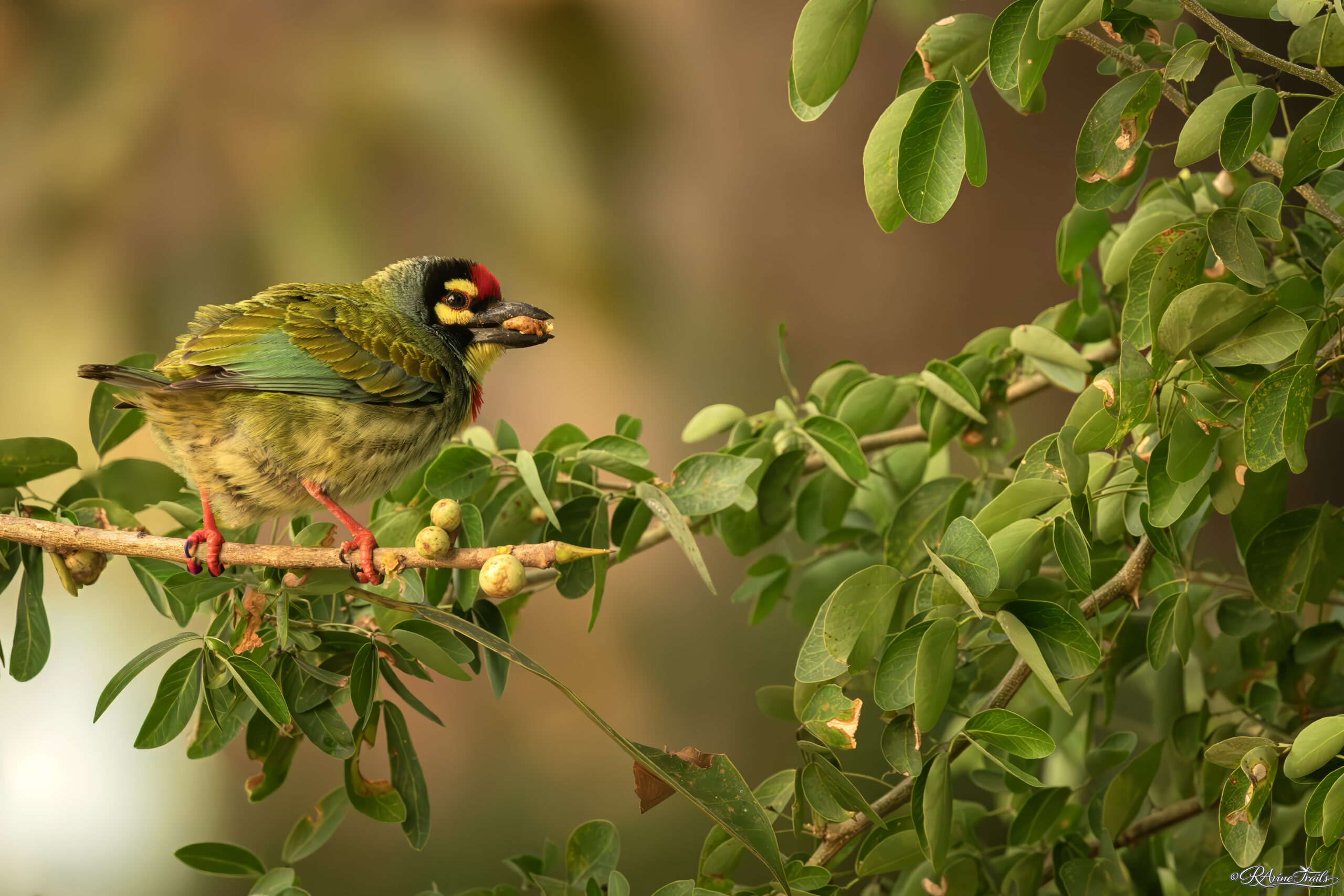
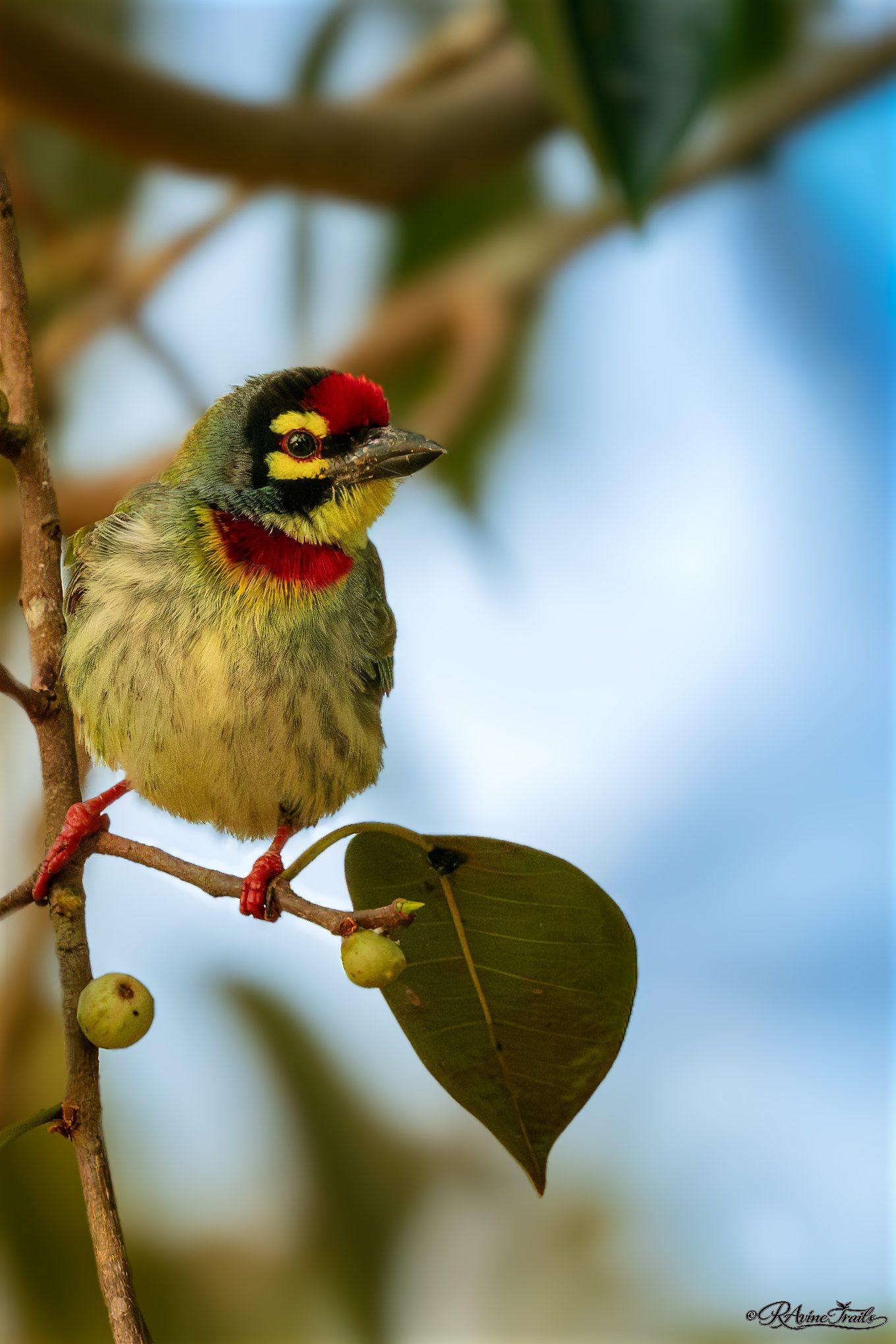
Red crown like a fresh seal of wax. Yellow eye patch glowing against black facial markings. A streak of crimson across the throat. And beneath it all, green — the kind that dissolves into leaves until the bird becomes part fruit, part foliage.
Reflections
Watching a Coppersmith Barbet in a fruiting tree feels strangely domestic — like observing a craftsman at work in his own workshop. There is intent in every movement. No drama. No flourish. Just purpose.
When it leans forward to pluck a fig, the posture is almost exaggerated — body angled, red legs gripping firmly, feathers slightly puffed as it balances. In that moment, it feels grounded, tangible, real.
The Coppersmith Barbet is not shy, but it is strategic. It chooses fruiting trees — especially figs — and works them methodically. One fruit at a time. Grip. Twist. Swallow. Repeat.
It does not hurry. It does not waste energy.
What fascinates most is its vertical confidence. It climbs along branches with ease, gripping bark firmly, adjusting its posture with small, calculated movements. Between feeding bouts, it pauses — head tilted, eyes bright, throat pulsing faintly as it calls again.
That metallic call is not random. It is persistent. Territorial. A declaration carried through heat and still air. During breeding season, the call can continue for hours, almost mechanical in its consistency.The bird feeds.
The bird calls.
The bird builds.
Conservation Significance
The one that we do not always see is the Quiet labour — the excavation of nest cavities. With that stout bill, it chisels into softened wood, creating hollows not only for its own brood but for future occupants long after it has moved on.
Unlike fleeting migrants, this is a resident voice in the landscape. A reminder that certain rhythms are dependable — as long as the trees remain.
But fruiting trees are not accidental. They require age, continuity, and protection. Remove old figs. Replace native groves with ornamental shrubs. Clear deadwood too eagerly.
And the tinkerer falls silent.
Fieldcraft
Barbets return to productive branches. If you observe long enough, you will recognize the pattern. Anticipate where it will step next. Pre-visualize the angle. Then take the frame when posture, light, and expression align.
No rush.
No excess.
The palette is intense — red, yellow, green, black. The key is to trust natural light. Early warmth enriches the red crown and throat patch without artificial exaggeration.
Fruit in the mouth becomes narrative and context. A barbet holding a fig is not merely a portrait. The branch, the leaves, the curve of the twig are not distractions but essential elements of story.
In tighter frames, focus on the eye. The yellow orbital patch acts as a visual magnet. In wider frames, allow breathing space so the bird does not feel crowded by its own environment.And above all — The most critical Element as always is patience.
The Coppersmith Barbet does not seek admiration. It keeps time.
In fig trees across towns and forests, it marks the season with steady percussion. It feeds without spectacle. It builds without announcement. It persists.
As long as fruit ripens and old wood stands, its metallic note will continue to strike the air — small, bright, dependable. And perhaps that is what makes it unforgettable.