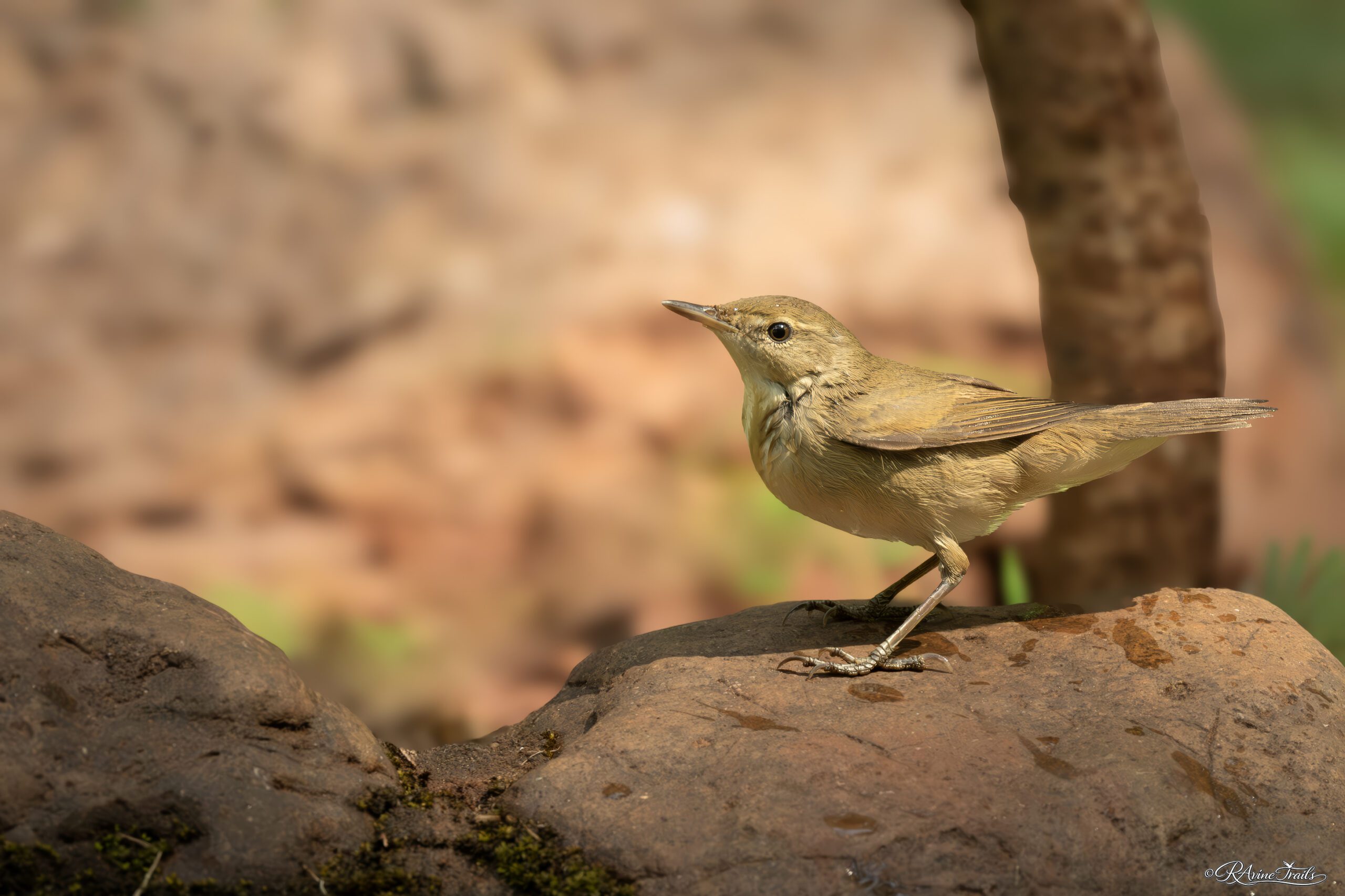
At first glance it appears almost anonymous — Then you see it. A small brown bird with soft buff tones and a slender bill, moving quietly among reeds, shrubs, and tangled vegetation. But anonymity in the natural world is a kind of brilliance. The warbler’s understated appearance is perfect camouflage, allowing it to move through dense foliage unseen. To the human eye, this bird reveals itself only through patience.
Reflections
From an observer’s perspective, moments with this bird feel almost accidental. One minute the shrub seems empty, the next it holds a small life watching the world with bright, alert eyes. And just as quickly, it vanishes again.
The Blyth’s Reed Warbler lives within layers — reeds, shrubs, thickets, and young woodland growth. It climbs stems, slips between leaves, and pauses briefly on exposed twigs before disappearing again. Watching it demands attention to the smallest movement: a flick of a tail, a quick turn of the head, a subtle shift in the leaves.
For much of the year, this bird is not even meant to be here.
Blyth’s Reed Warbler is a long-distance migrant. It breeds far to the north across Central Asia and parts of Eastern Europe, and when winter approaches it travels thousands of kilometres to spend the colder months in the Indian subcontinent. What appears to be a quiet little bird perched on a branch is in reality a seasoned traveller that has crossed continents guided only by instinct and sky.The warbler rarely sits still for long. It moves deliberately through vegetation, inspecting stems and leaves for insects. Small caterpillars, beetles, and other invertebrates form the backbone of its diet. Its movements are purposeful but not hurried — a steady rhythm of climbing, pausing, and probing that blends perfectly with the quiet activity of the undergrowth
Conservation Significance
These encounters also remind us how deeply migratory birds depend on connected habitats. Wetlands, scrublands, reed beds, and semi-wild edges of forests provide the cover and food these travellers rely on during their long journeys.
When such habitats shrink or fragment, migration becomes harder. The stopovers that once sustained these small travellers begin to disappear.
And birds like Blyth’s Reed Warbler do not protest. They simply fail to arrive.
Which is why moments like this — a migrant resting quietly on a branch after crossing continents — carry a quiet weight. They remind us that even the smallest birds are part of vast journeys, and that the landscapes they depend upon stretch far beyond what we see.
Fieldcraft
For the photographer, Blyth’s Reed Warbler presents a different kind of challenge. There are no dramatic colours or extravagant patterns to carry the image. Instead, the beauty lies in subtlety — warm earth tones against soft green backgrounds, delicate feather textures, and the slender elegance of its form.
Composition becomes everything.
The simplicity of a reed stem, the diagonal of a dry branch, or the gentle blur of foliage can frame the bird in ways that reveal its quiet character. Patience matters more than speed. The warbler offers brief windows — a pause on a twig, a glance toward the light — and in those few seconds the image must be made.
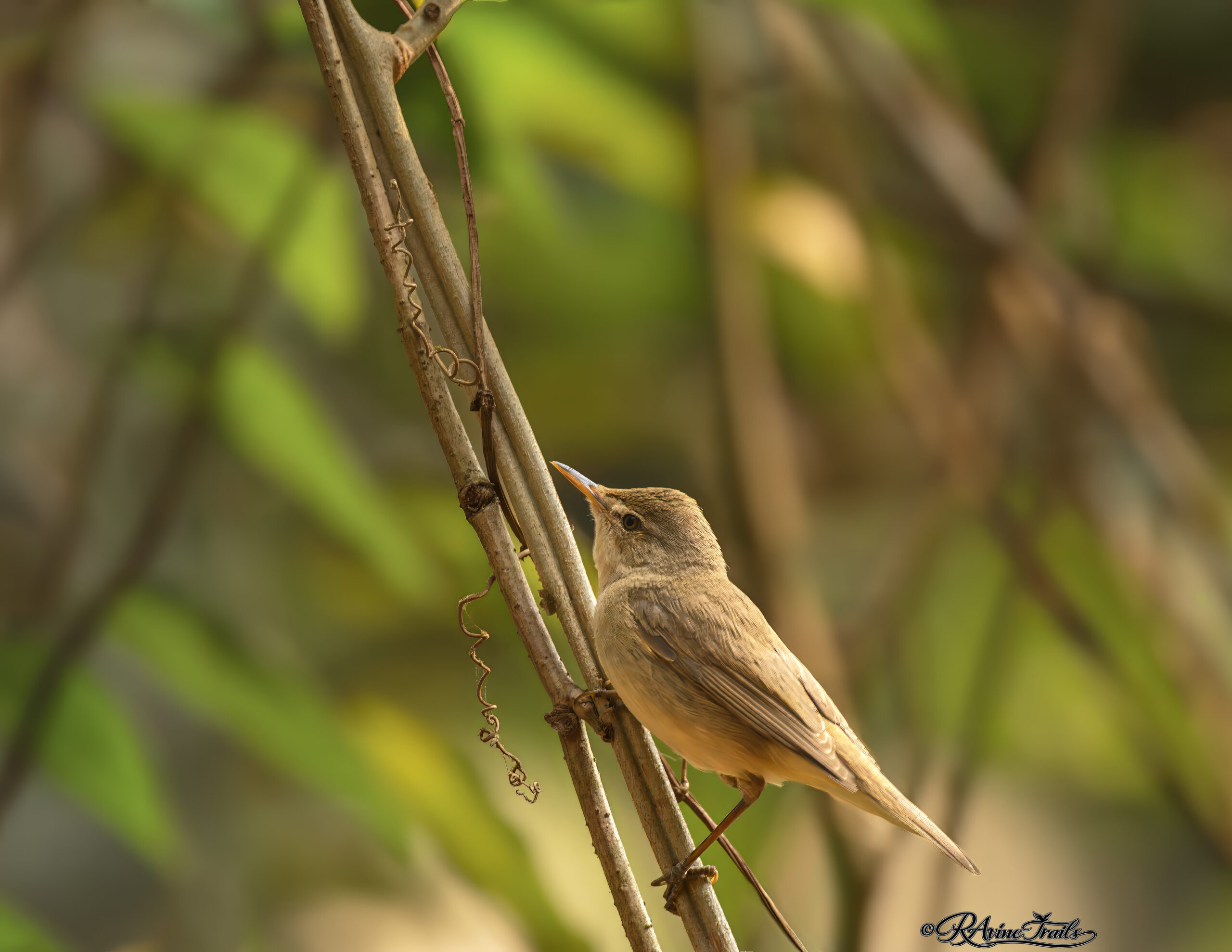
In the end, the Blyth’s Reed Warbler is not a bird that demands attention. It is a bird that rewards it.