Red Whiskered Bulbul – Whiskers you never forget
There are birds you recognise by their song, some by their silhouette, and some by a single unmistakable mark. The Red-whiskered Bulbul belongs to the last kind—a bird whose face seems almost deliberately painted, as though the forest gave it one final stroke of red before sending it on its way.
Reflections
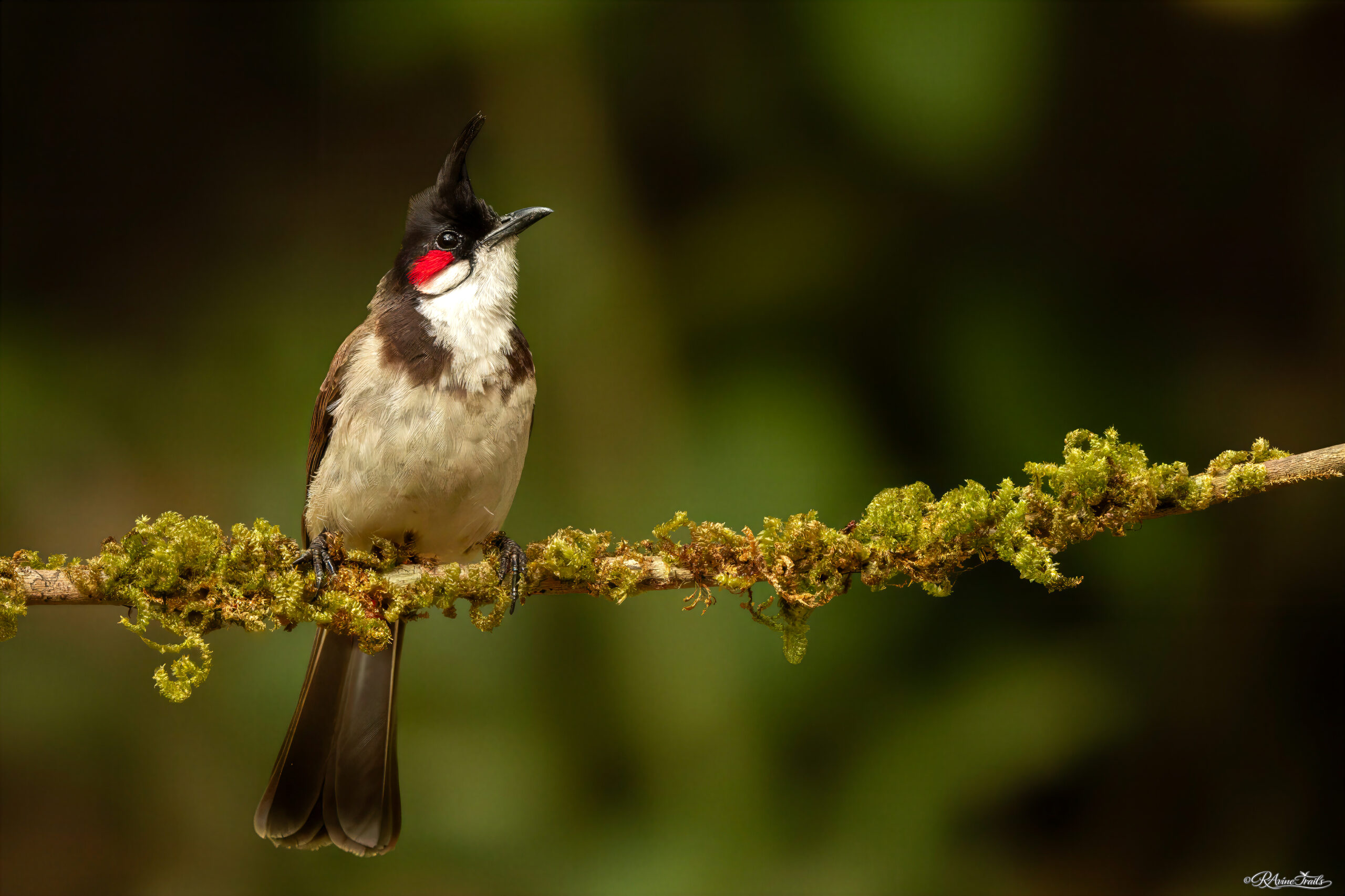
The first thing that catches the eye is the crest. Tall, pointed and almost theatrical, it gives the Red-whiskered Bulbul an air of confidence that seems disproportionate to its size.
Beneath it, the face is a study in contrasts—the dark crown and mask surrounding a bright eye, the clean white of the throat and cheeks, and then that sudden splash of red behind the eye. It is a remarkably precise arrangement of colours.
Its warm brown wings and back complete a plumage that is both understated and striking
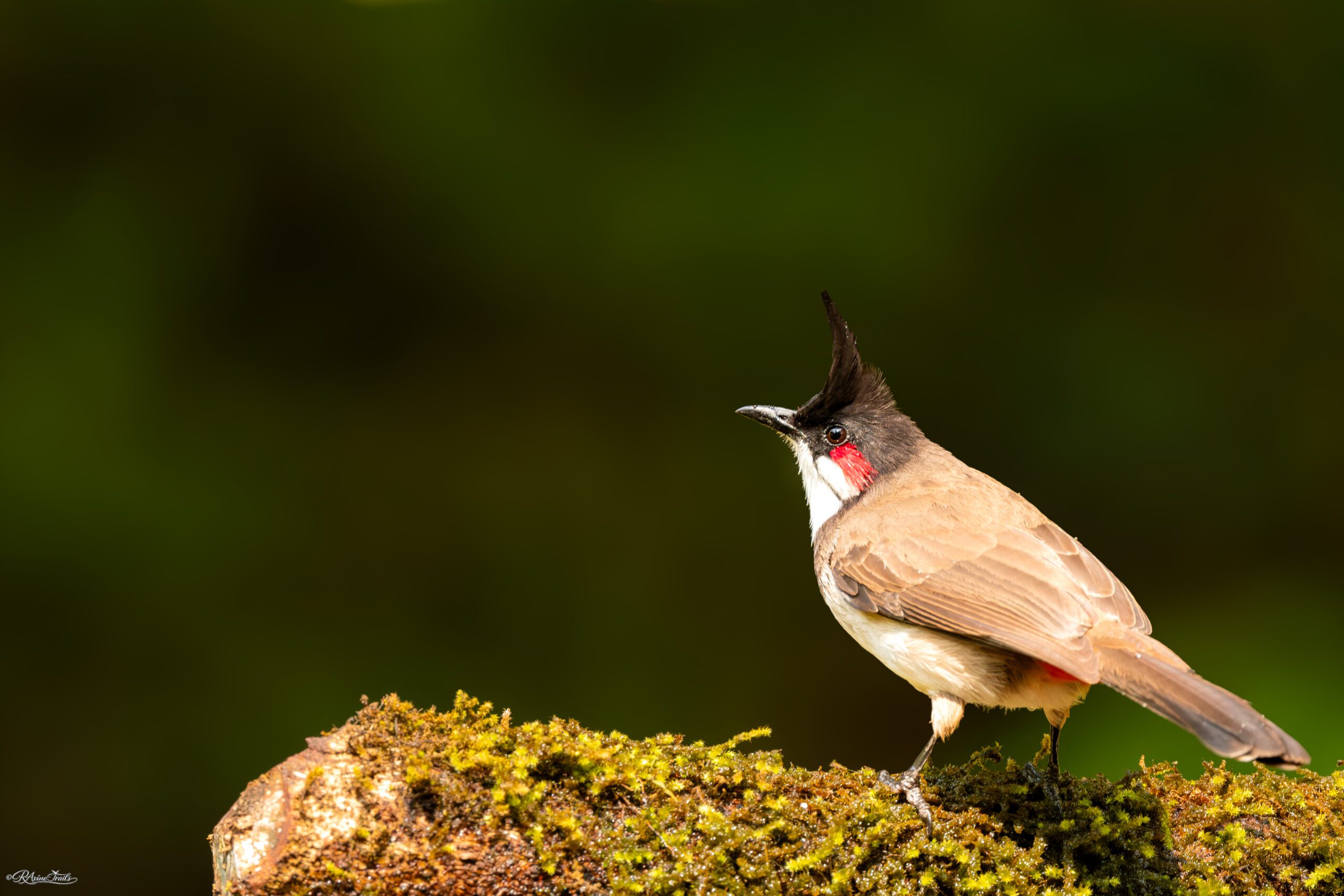
The warm brown of the back and wings softens the portrait, while the pale underparts bring balance to the darker head. Even the small patch of red beneath the tail adds another detail for the attentive observer.
Perched against the deep greens of the forest, the bird almost seems to know that it has a face worth looking at.
And perhaps that is what stays the most—not simply its beauty, but its expression. There is something wonderfully alert about the way it looks into the distance, crest raised, body poised, as though it is always aware of what is happening around it.
Fieldcraft
For a photographer, the Red-whiskered Bulbul is an unusually rewarding subject. Its markings naturally draw the eye towards the face—the sharply raised crest, the dark eye and mask, the clean white cheek and throat, and, most strikingly, the vivid red patch behind the eye that gives the species its name. It is a bird that seems almost made for portraiture, with a combination of form, colour and expression that remains compelling even in a simple frame.
There is also a certain drama to the species beyond its appearance. Its melodious calls often become part of the soundscape in the early morning and again towards late afternoon and evening, when its activity is more noticeable. The bird is therefore experienced as much through sound as through sight, adding another dimension to an encounter that might otherwise be reduced to a photograph.
Moments such as these are not simply about getting the bird sharply in frame. The real challenge lies in bringing together subject, light, background and composition at the same instant. Particularly with a bird that has adapted remarkably well to human-modified landscapes, thriving even around gardens, settlements and concrete spaces, the photograph becomes an exercise in separating the wild subject from the clutter of the urban world.
Here, the understated greens and shadows of the background allow the bird to remain the unmistakable centre of attention. The moss-covered perch adds just enough texture and context without competing with the subject, while the soft background creates the sense of a forest portrait.
And perhaps that is what makes these frames work—the Red-whiskered Bulbul may be perfectly capable of living alongside our concrete world, but for a fleeting moment, the photograph gives it back the forest.
Conservation Significance
It is not a bird that needs to be encountered only in pristine wilderness. It can occupy a variety of wooded habitats, gardens, scrub and forest edges, which has helped it remain a familiar presence across much of its range.
And that familiarity is worth remembering.
Conservation is often discussed through the language of rarity—endangered species, shrinking populations and disappearing habitats. But there is another measure of a healthy landscape: the continued presence of the ordinary birds that share our surroundings.
A Red-whiskered Bulbul calling from a tree, moving through vegetation or pausing on a branch is part of that everyday richness.
Perhaps the real achievement of conservation is not simply bringing a species back from the edge, but ensuring that future generations never have to wonder what it looked like.
The Red-whiskered Bulbul announces itself with brilliance and does it with character.
A raised crest, a watchful eye, a white throat—and that tiny red mark beside the face.
Small details, perhaps. But sometimes a single detail is all it takes to make a bird unforgettable. Nature, in this case, seems to have understood the value of restraint.And once you have seen that red whisker, you never really forget the face.