Black Naped Monarch – The Silent Acrobat
The Black-naped Monarch moves through the forest like a small acrobat in the sky that has slipped into the trees. You see the bird flash in front of your eyes before you hear it.
Its soft blue plumage catches the light gently, never harsh or overwhelming, but vivid enough to stand apart from the greens and browns of the canopy. At the back of its head sits the subtle detail that gives the bird its name — a small black patch along the nape, like a quiet signature.
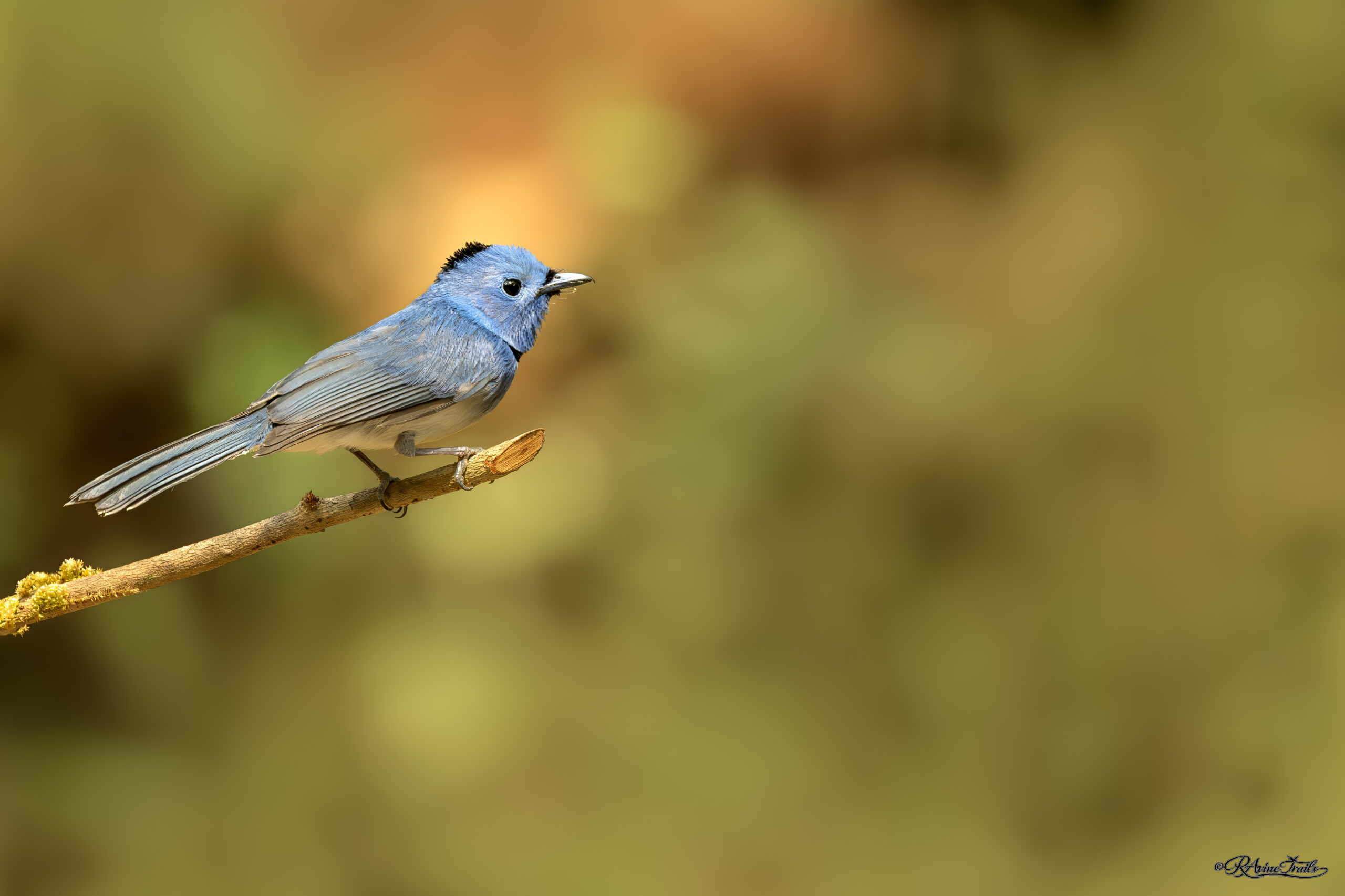
Reflections
Despite its striking colour, the monarch is rarely still for long. It moves lightly through the mid-canopy, weaving between branches with an effortless grace. Short flights carry it from perch to perch as it searches for insects, often hovering briefly or snatching prey in quick aerial manoeuvres.
For an observer, the Black-naped Monarch feels almost restless in its elegance. It seldom lingers in open view. One moment it is perched calmly, head turning in quick attentive movements. The next moment it disappears into a nearby branch only to reappear again a few metres away.Watching it is less about waiting for a dramatic moment and more about following a rhythm — a quiet sequence of motion, pause, call and flight.
Conservation Significance
The Black-naped Monarch thrives in wooded habitats — evergreen forests, shaded groves, and mature gardens where tree cover remains continuous. In these layered environments, insects remain abundant and safe corridors allow birds to move freely through the canopy.
When tree cover becomes fragmented or overly simplified, these delicate movements between branches become more difficult. The disappearance of insects and the thinning of canopy layers quietly affect birds whose lives depend on the subtle architecture of forests.
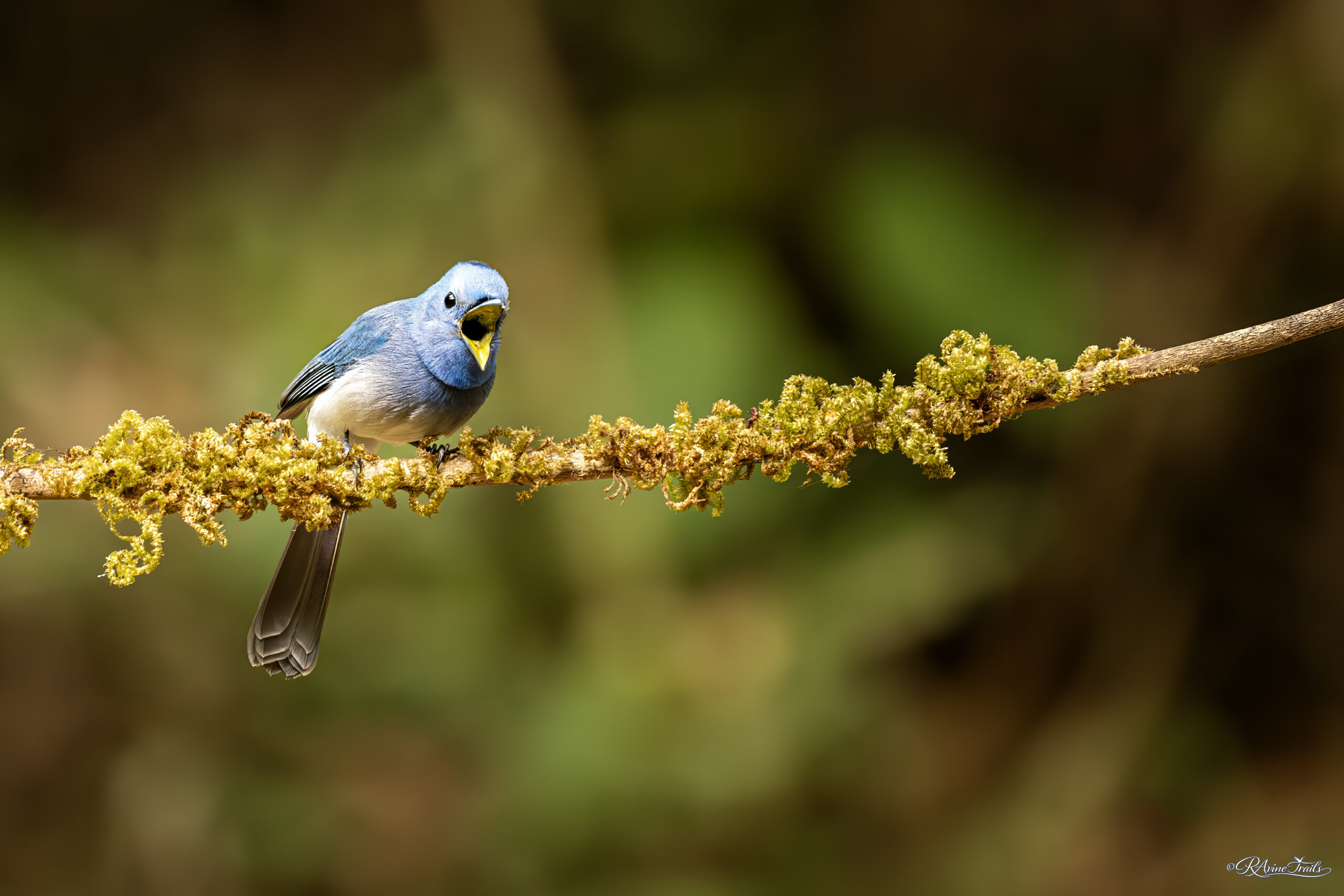
Fieldcraft
From a photographer’s perspective, the monarch presents a beautiful balance of colour and delicacy. The blue tones contrast wonderfully against warm forest backgrounds, particularly when the light of early morning or late afternoon softens the surroundings into golden hues.
Because the bird moves frequently, anticipation becomes more valuable than speed. Observing the direction of its movement through the branches often reveals the next likely perch. When the bird pauses, even briefly, the photograph becomes less about chasing action and more about capturing that fleeting stillness.
Clean perches and open space around the bird help emphasize the elegance of its form. The long tail, gentle curve of the back, and the bright blue body create a naturally balanced silhouette when framed carefully.
For now, in places where trees still stand tall and insects still fill the air, the monarch continues its graceful patrol — a brief flash of blue between the leaves, or a quiet pause on a sunlit branch. Perhaps that enduring presence, and the sense of wonder it inspires, is why the bird found its place on the First Day Cover of India Post’s UNESCO World Heritage Series — a small reminder that some of our most remarkable natural treasures are worth preserving long after the moment of discovery has passed.