Flame-throated Bulbul – The Forest’s Golden Resident
The Flame-throated Bulbul is one of the Western Ghats’ quiet bursts of colour — a bird that seems almost painted into the forest rather than simply living in it.
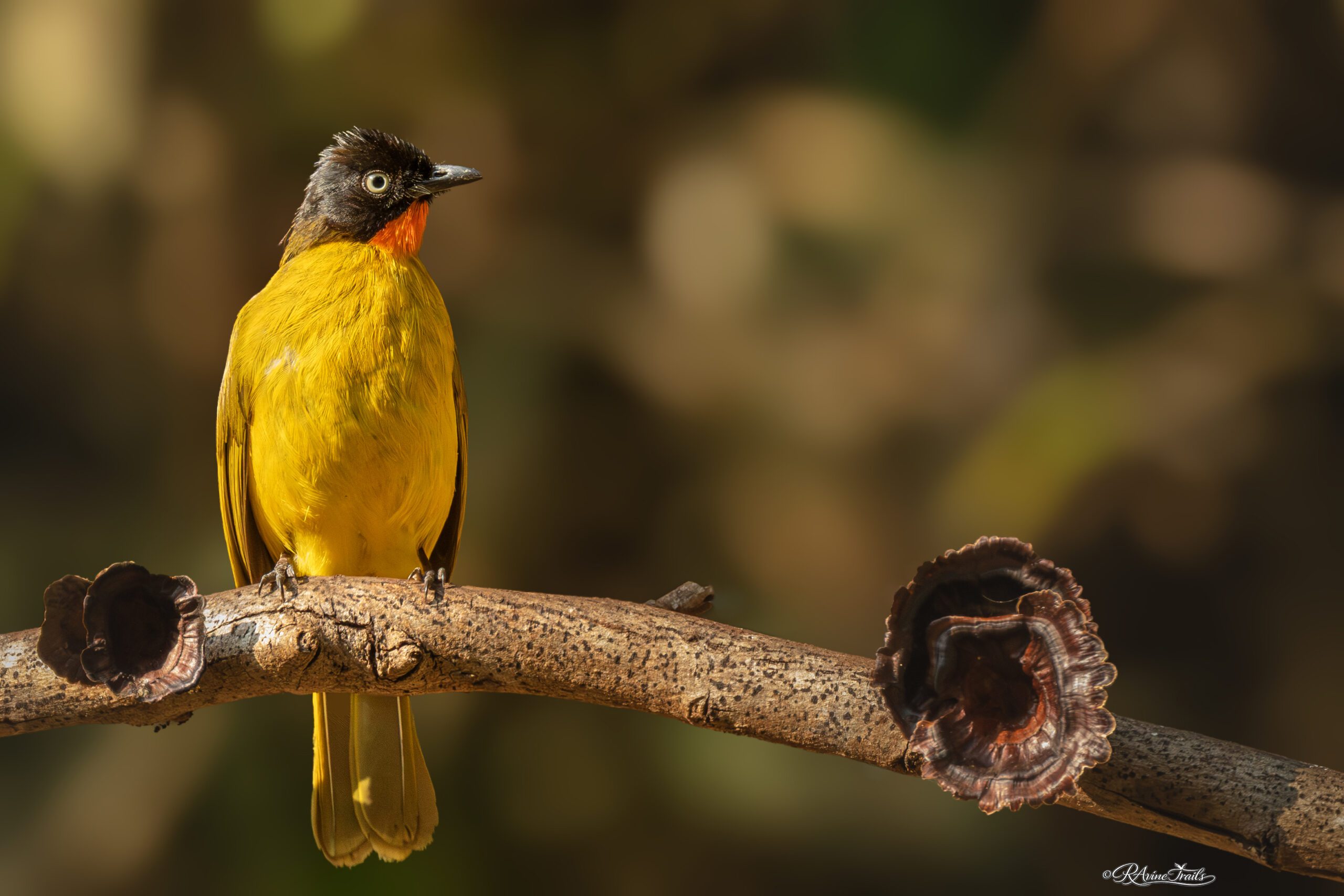
Reflections
The bird gets its name from rich yellow tones, warmed further by the small but unmistakable patch of orange red flamed throat. Above this brightness sits a velvet-black head. When soft light hits, it appears less like a feather pattern and more like a tiny lamp glowing within the foliage.
Despite its striking colours, the Flame-throated Bulbul is rarely dramatic. It moves steadily through the middle layers of the forest, hopping along branches, pausing to inspect leaves, and occasionally darting forward to pick insects or pluck small fruits. Often it travels in loose association with mixed feeding flocks — Drongo, flycatchers, and other bulbuls — each species contributing to the quiet rhythm of movement through the trees.
A bulbul may pause only briefly, scanning the canopy before moving again. Its presence is often first revealed by a soft call or a flicker of yellow crossing between branches. Then suddenly, there it is — balanced on a perch, alert, curious, and briefly illuminated by a shaft of light.
Conservation Significance
The Flame-throated Bulbul is endemic to the Western Ghats, one of the world’s great biodiversity hotspots. Its life is deeply tied to evergreen forests where fruiting trees, dense canopy layers, and insect-rich foliage support the delicate balance of species that thrive there.
When these forests fragment or thin, the quiet continuity of that world begins to weaken. Mixed feeding flocks disperse. Fruit-bearing trees decline. The small rhythms that sustain birds like this bulbul begin to unravel.
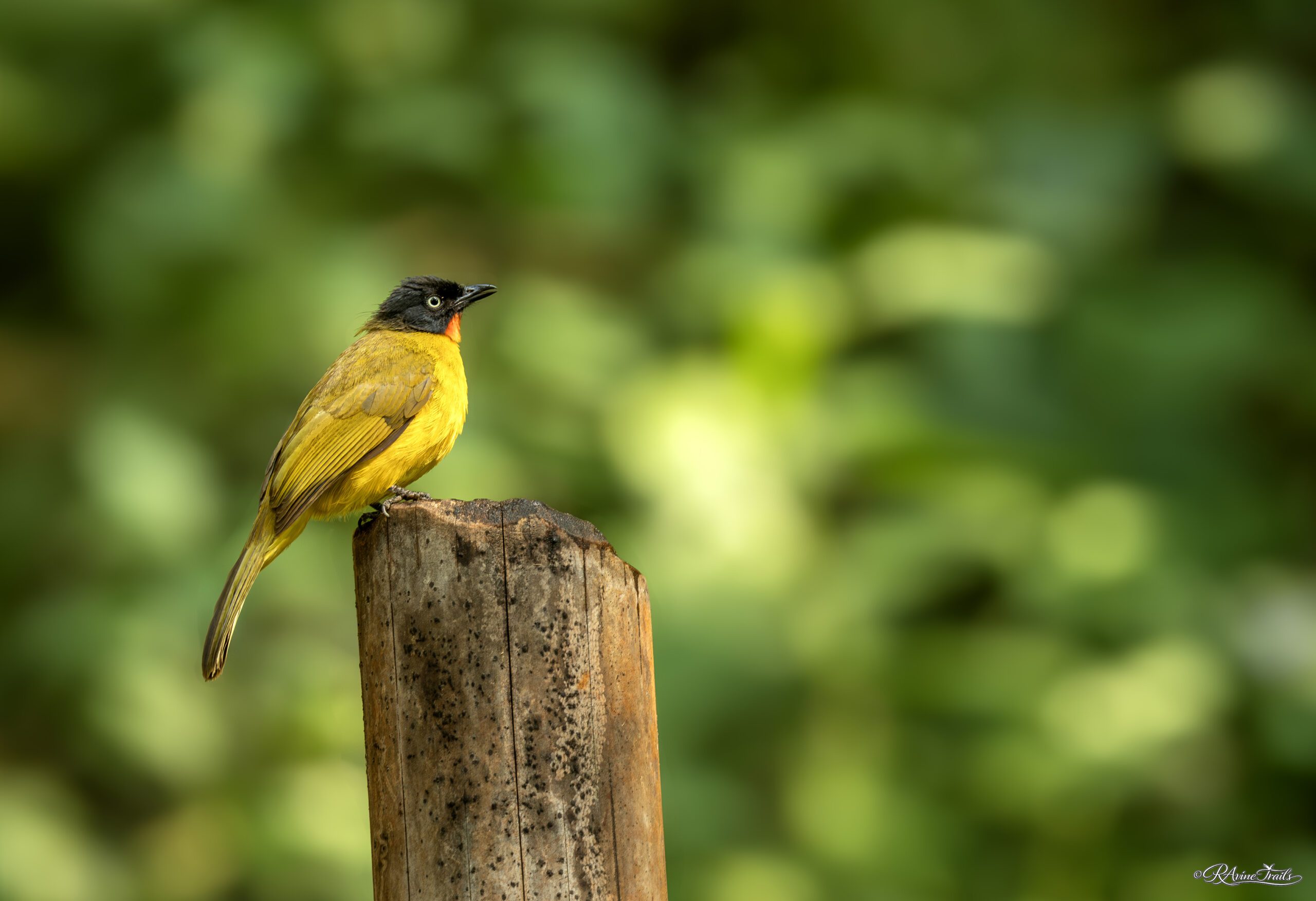
Fieldcraft
For a photographer, the Flame-throated Bulbul offers a wonderful study in colour harmony.
The bird’s warm yellows and orange throat glow beautifully against darker forest backgrounds, especially when patches of filtered sunlight create soft bokeh. Positioning becomes important here — allowing the background to fall into deeper greens or shadow helps isolate the bird and gives the colours room to breathe.
The perch can also shape the story of the frame. Natural textures — moss, lichen, or weathered branches — complement the bird’s warmth without competing for attention. When everything aligns — light, perch, background — the photograph feels less like documentation and more like a moment suspended inside the forest.
And yet, for now, the Flame-throated Bulbul still moves through the Western Ghats like a living spark — a reminder that the forest’s beauty is not only grand and ancient, but also small, vivid, and alive in every branch where light touches feather.