Pond Heron – The Ordinary Guardian
The Indian Pond Heron is often dismissed as common. This is dangerous because what becomes common in our perception becomes rarely noticed or protected until it no longer is common.
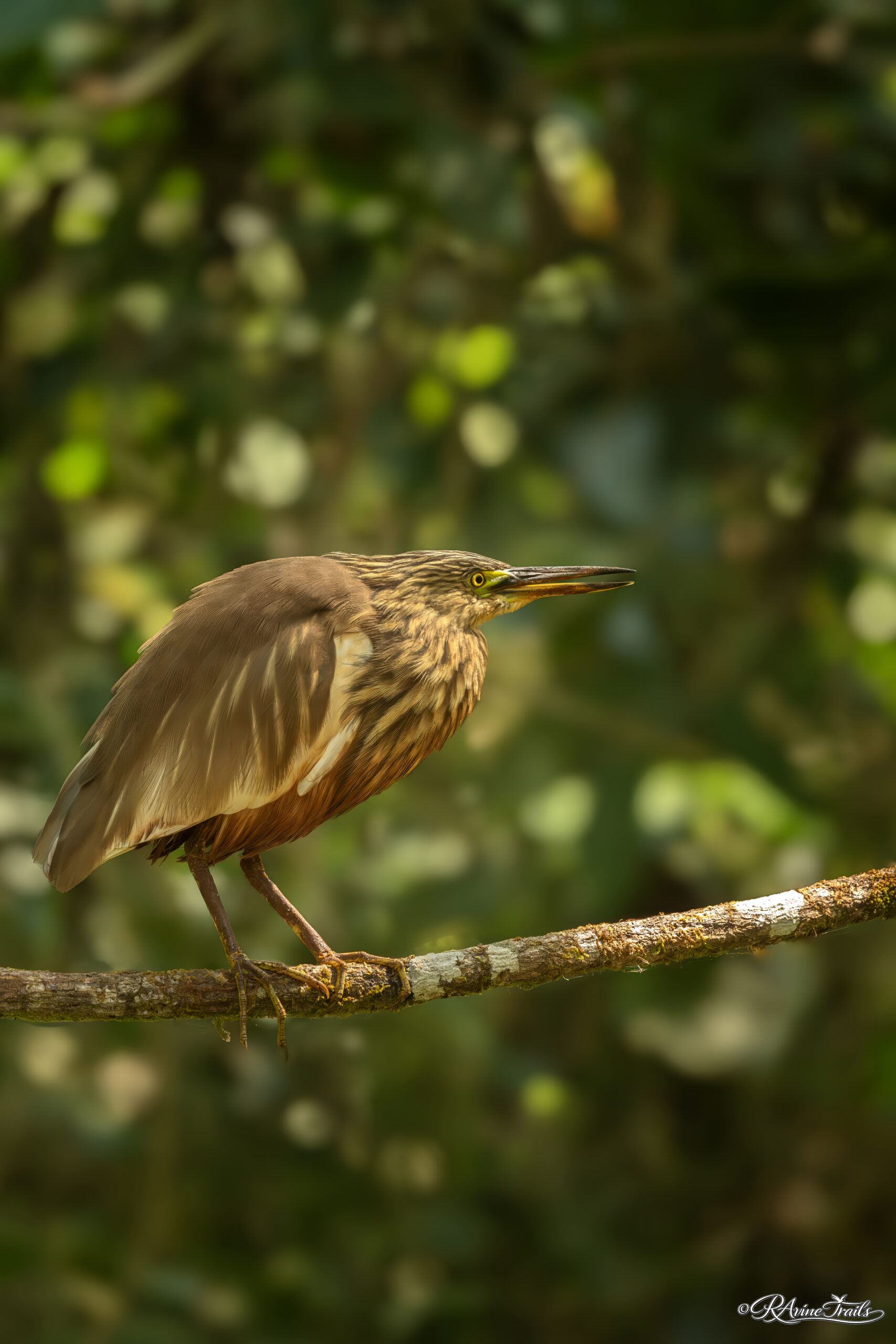
Reflections
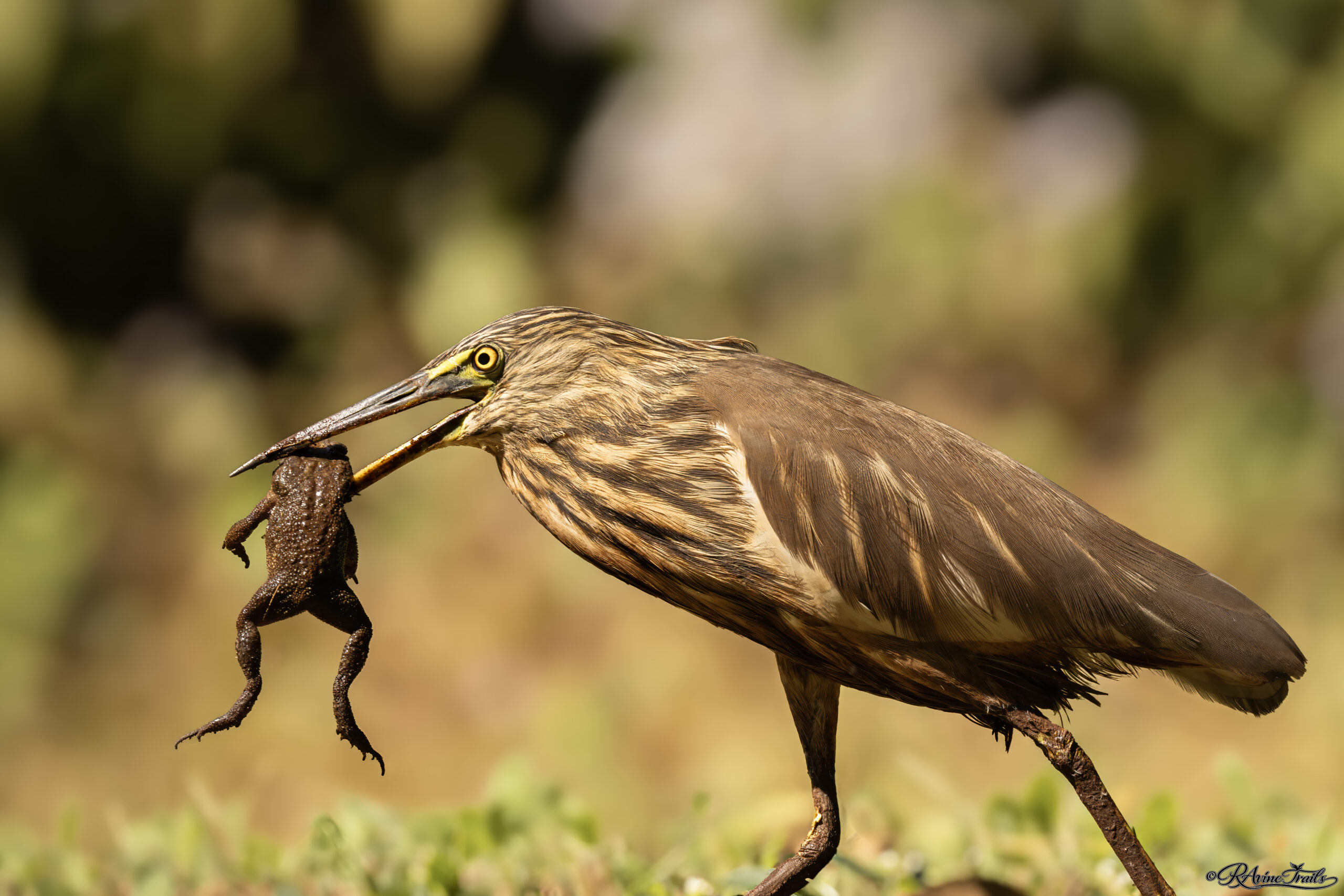
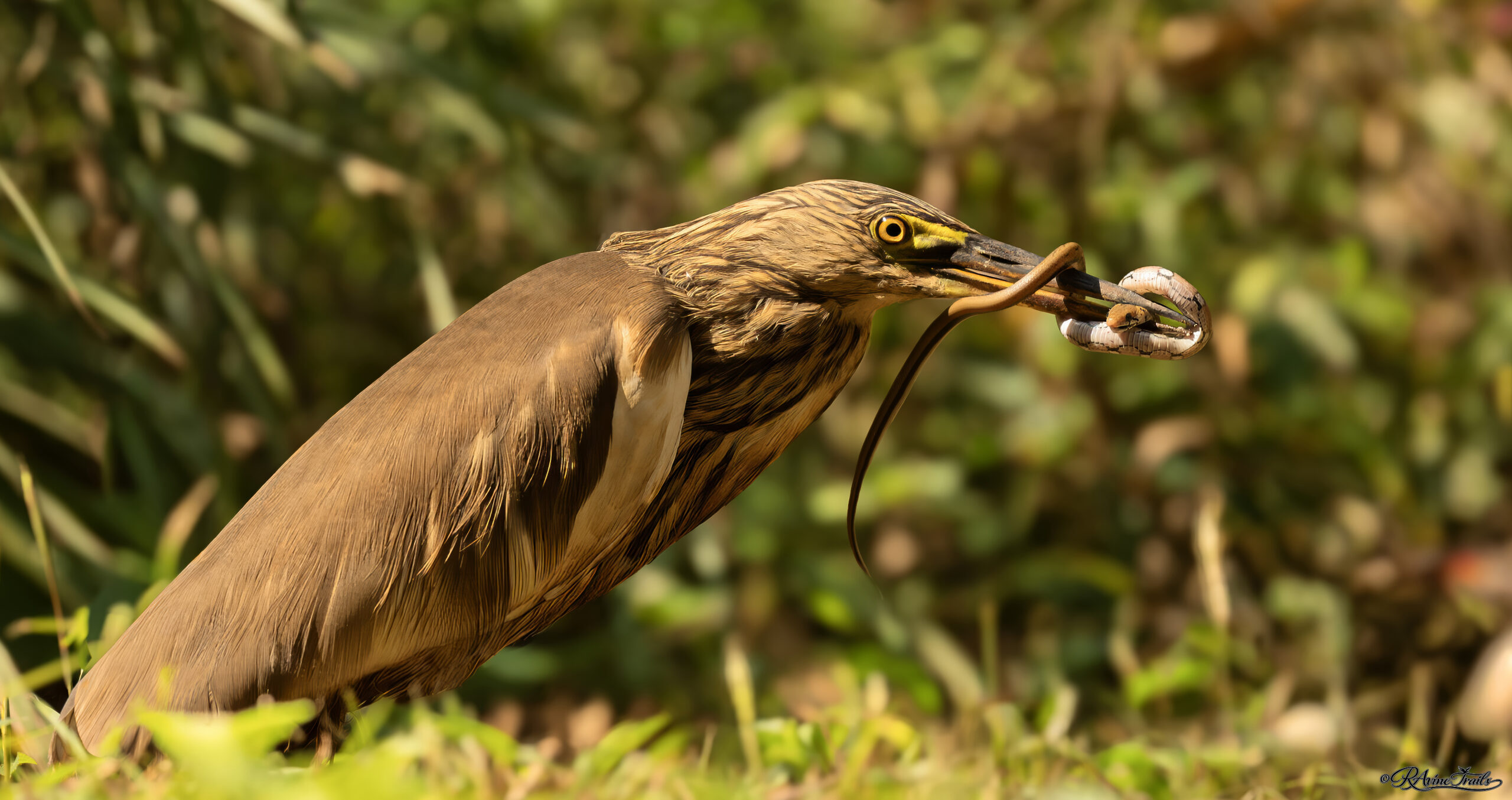
The pond heron is more than a patient hunter. frogs, fish, crustaceans, insects, even small snakes are a part of its diet which places it squarely within the delicate balance of wetlands. The hunt is silent and still. It camouflages and snaps quickly with its long beak to snatch its prey. The pond heron becomes a bio-indicator
Where they thrive:
- Amphibian populations are intact.
- Shallow wetlands still breathe.
- Insect life cycles remain undisturbed.
- Seasonal hydrology still functions.
Conservation Significance
The Pond Heron survives close to human settlement unlike other forest birds. It shares space with us and that proximity makes it both resilient and vulnerable. A decline in their population often signals something deeper like pesticide-heavy agriculture, sewage-loaded lakes, disappearing marshes, encroached floodplains.
When village ponds are filled.
When lakes are concretised.
When rice fields turn into gated communities.
The pond heron does not fight. It simply disappears. And with it goes a layer of ecological balance we barely noticed.
Protecting the pond heron means protecting:
- Urban wetlands
- Agricultural water bodies
- Riparian margins
- Seasonal floodplains
Conservation, here, is not remote. It is local. Immediate. Civic.
Fieldcraft
Photographing the pond heron is about surrendering to stillness. You cannot rush this bird. Through the lens, you begin to notice what casual observers miss:
- The micro-adjustments of its eye before a strike.
- The tension gathering in its folded neck.
- The exact millisecond before the bill becomes a spear.
The hunt is silent. The frame must be quieter. When it lifts a frog or a snake, you witness raw predation — but without brutality. There is no spectacle. Only necessity. A clean line between hunger and survival. And then there is the flight.
Every photographer who has spent time with this species knows the moment: the sudden explosion of white wings from what looked like a clump of mud. It is one of the most satisfying reveals in wetland photography — a reminder that nature always keeps a surprise for those who wait long enough.
From behind the camera, the pond heron becomes a study in:
- Timing over speed
- Anticipation over reaction
- Observation over intrusion
It demands ethical distance. And it rewards patience. It teaches us that the wild is not captured; it is witnessed.
There is a temptation in wildlife journaling and storytelling to chase the rare, the dramatic, the headline species. But conservation does not survive on the rare and the prioritised ones only. It survives on awareness of what is happening around us everyday.
The pond heron forces us to confront a question: “If we cannot protect the wetlands in our own neighbourhoods, what are we really conserving?”
Through the lens, it becomes clear — the “ordinary” species are the foundation. Remove them, and ecosystems unravel silently.Every frame of a pond heron with a frog in its bill is not just a moment of action. It is proof that the wetland still works.