Yellow Browed Bulbul – Yellow Gold
Another true jewel of the Western Ghats, extending through parts of Peninsular India and into Sri Lanka, this is a species found nowhere else on Earth — The Yellow browed bulbul is a living thread in the rich ecological layer of the subcontinent’s rainforests. Its presence is deeply but solely tied to these humid evergreen landscapes, making it not just beautiful, but biologically significant.
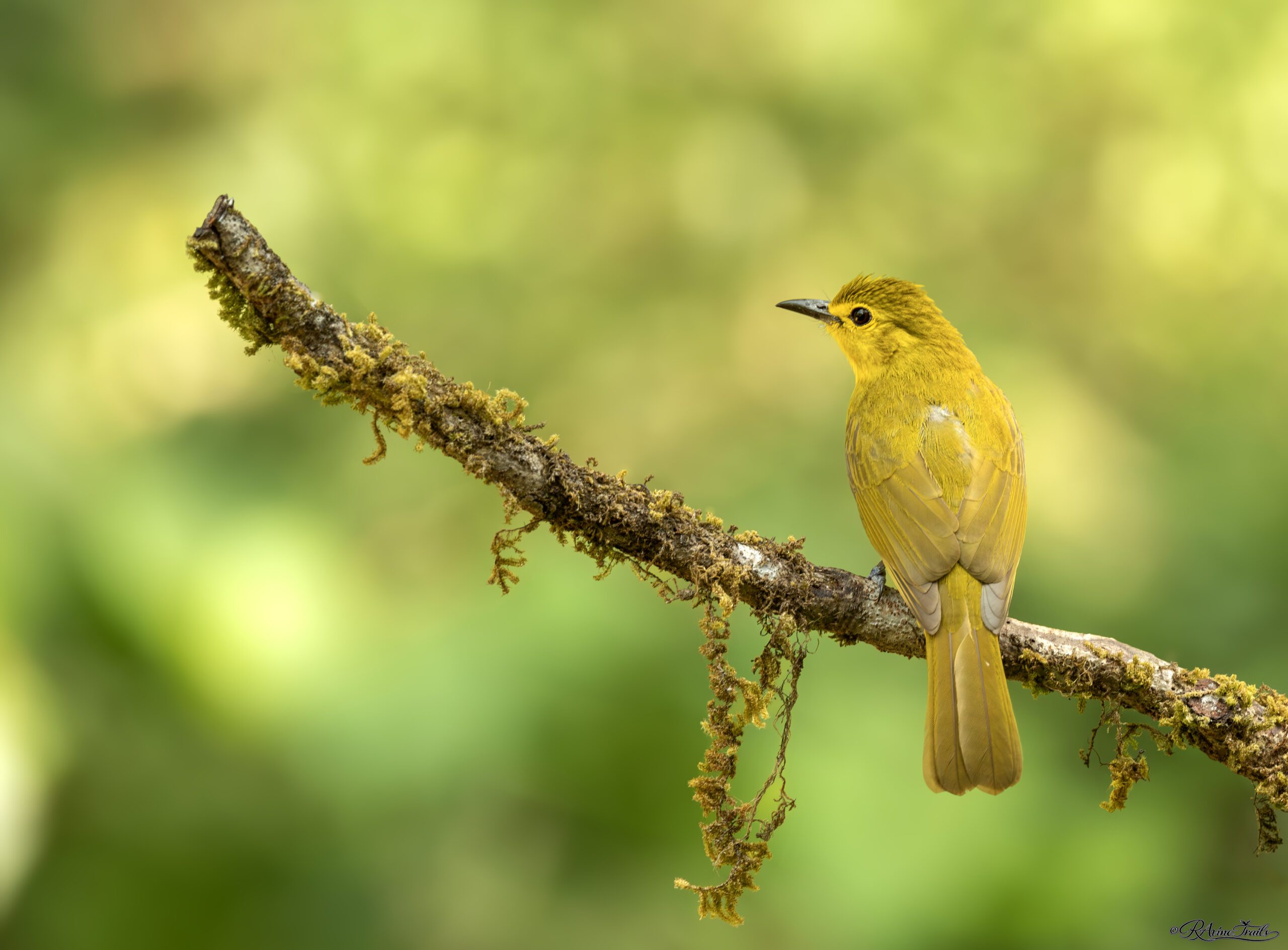
Yellow Browed Bulbul
Reflections
Behaviourally, the bird is alert yet not overly restless. It moves deliberately through foliage, often in pairs or small groups, feeding on berries, fruits, and occasionally insects. Its presence is frequently announced by soft, melodic calls before it is actually seen. When it pauses on an exposed perch, it is often for a brief scan of its surroundings before slipping back into cover. They are particularly active during misty mornings and post-rain hours, when insects are abundant and fruiting trees glisten.
The critical ecological role of the bulbul is as a seed disperser. By feeding on native berries and seeds, it helps regenerate the very forests that it depends upon. Its populations shift subtly on elevation though not really migratory depending on the seasonal fruit migrations vertically on the hills
Conservation Significance
Its survival like the other endemic species is deeply connected to the continuity of forests. Fragmentation due to expanding infrastructure and gradual alteration of native forest composition poses long-term threats. This habitat-specific nature gets threatened, even with subtle ecological shifts which can influence local populations. The species may not always make headlines, but its future depends on the preservation of these fragile, rain-fed ecosystems.
Fieldcraft
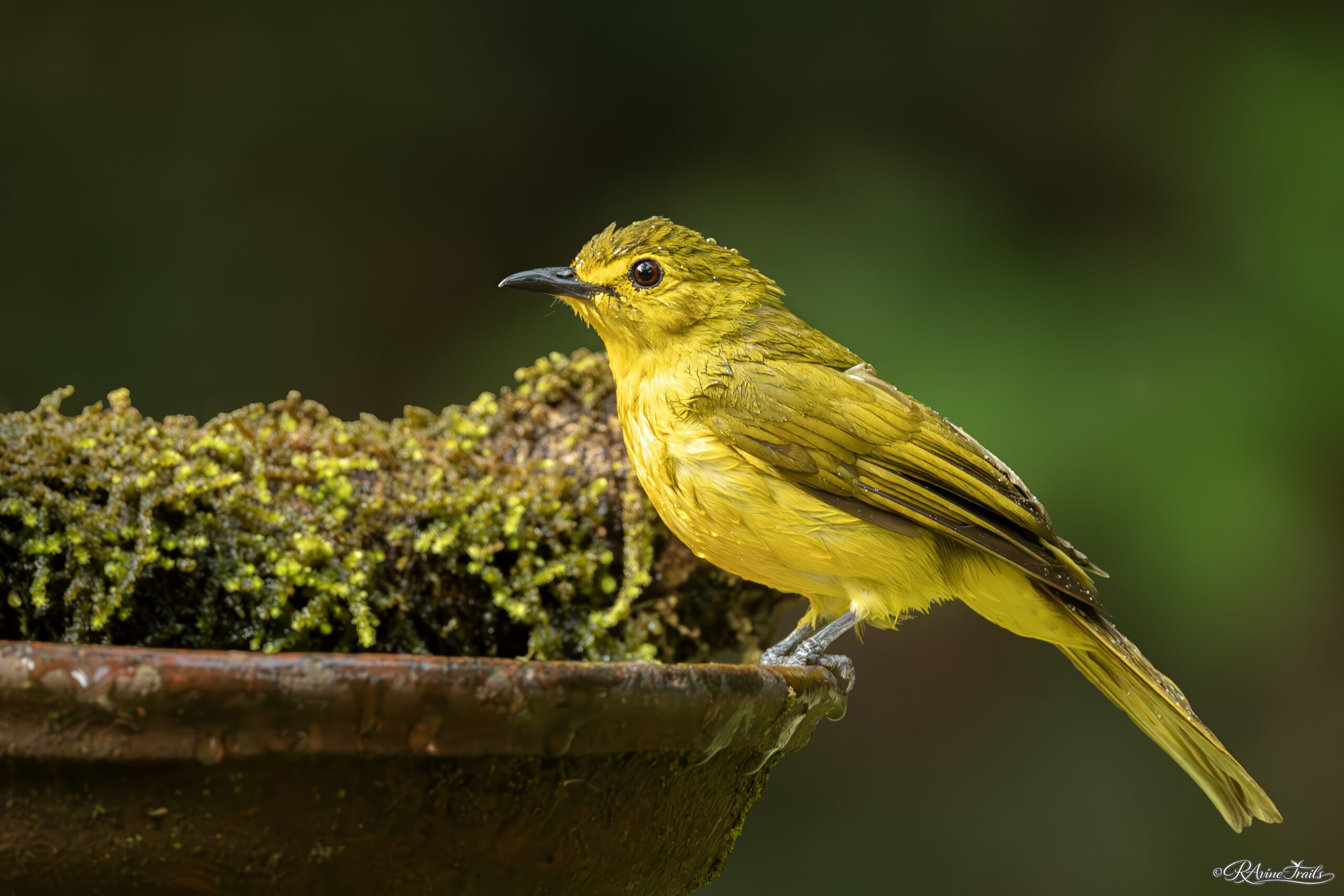
From a photographer’s perspective, this bird presents a unique challenge. Its preferred habitat is dim, shaded forest, demanding patience, high ISO tolerance, and steady hands. The vibrant yellow plumage can easily blow out in harsh light, while underexposure robs it of its brilliance. Achieving clean backgrounds in cluttered rainforest conditions requires careful positioning and anticipation. Moments like this — where the bird emerges into a clean plane of soft green — are rare and often fleeting. Emotionally, the image evokes freshness and vitality. The droplets clinging to its feathers suggesting its need for water.
There is quiet confidence in its posture, a sense of belonging. It does not dominate the frame; it harmonizes with it. The photograph carries a feeling of hope — that As long as these forests remain, such flashes of living gold will continue to illuminate the understory.